Anthropic Just Hit $965B — If That’s Real, Here’s the Playbook (and What It Means for Your AI Stack)
What would it take for a private AI company to jump to a $965 billion valuation—and beat OpenAI by $113 billion? Because if that headline is true, it’s not just “AI hype.” It’s a signal that the enterprise AI race is turning into a winner-take-most brawl.
Here’s the thing… the only part we can actually point to in verifiable public search results right now is a set of short broadcast-style clips repeating the claim that Anthropic raised $65B at a $965B valuation, with a lead group that includes Altimeter, Dragoneer, Greenoaks, and Sequoia.[1][2][3] The rest of the spicy details floating around (credit facilities, hyperscaler commitments, new model versions, revenue run-rates, IPO timing) aren’t corroborated in those sources.
So we’re going to do this the responsible way:

- Separate what’s supported from what’s not yet verifiable.
- Then run a thought experiment: if the broader story is true, what’s the practical playbook for entrepreneurs, creators, and marketers?
Deep dive: what’s real vs. what’s “needs receipts”
What we can cite (limited, but something)
- Claim repeated in multiple short clips: Anthropic reportedly raised $65B at a $965B valuation, surpassing OpenAI’s valuation.[1][2][3]
- Who those clips say led the round: Altimeter, Dragoneer, Greenoaks, and Sequoia.[1][2][3]
What’s not corroborated in the provided sources (treat as hypothetical)
Here’s what most people miss… a headline can be “everywhere” without being well sourced. In the search results we have, there’s no detailed written reporting or primary documents backing items like:
- “Series H” round labeling
- a $36B private credit facility earmarked for Google TPUs
- $15B hyperscaler commitments (or Amazon totals)
- 5-gigawatt compute agreements
- $47B revenue run rate / $50B ARR and near-term profitability
- Claude Opus 4.8, pricing, and benchmark claims
- a “Mythos” cybersecurity model and release timeline
- IPO timing (October 2026) and underwriting bank roster
Okay—if Anthropic really is at $965B, how did they “beat” OpenAI?
Let’s treat the full scenario like a movie trailer: you’re seeing the explosions, but not the plot. What would the plot likely be?
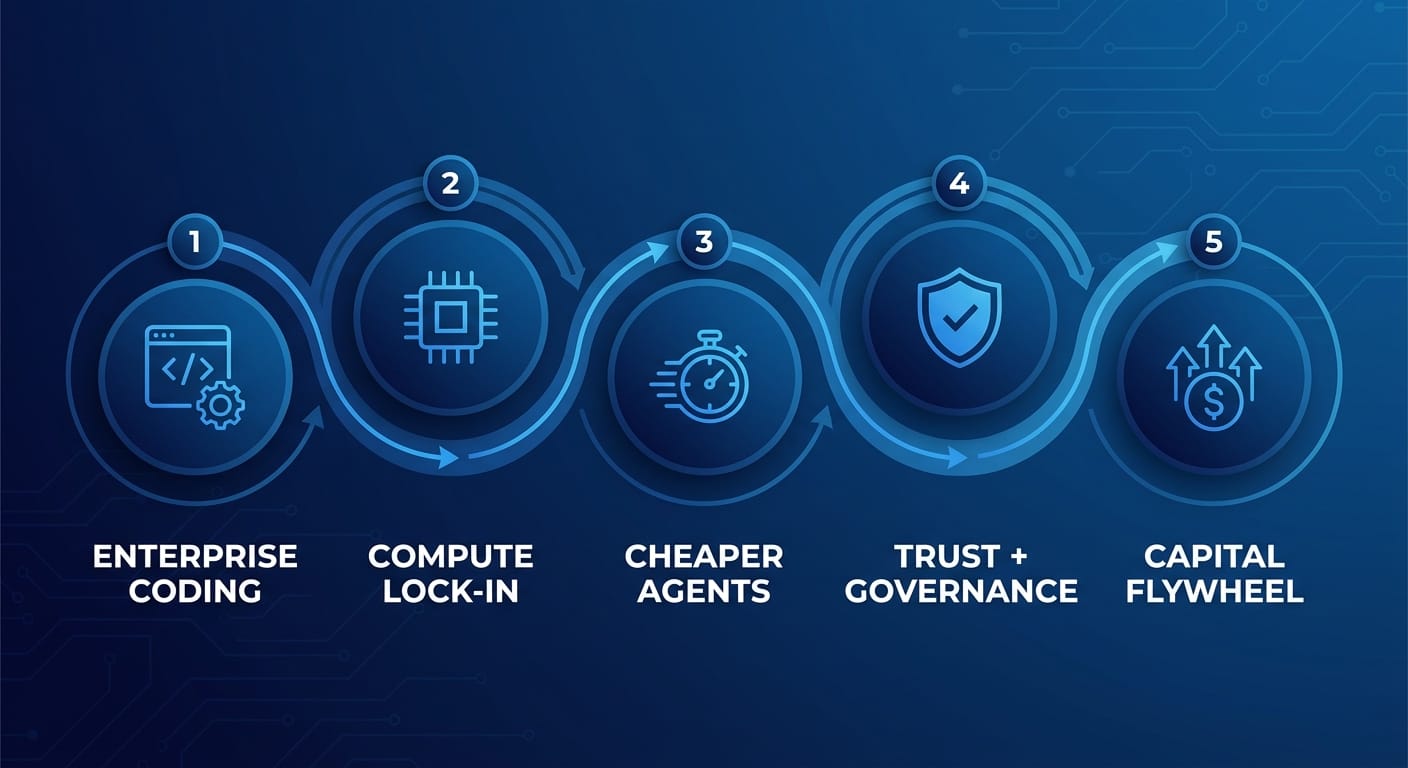
I’d boil it down to 5 forces that drive near-trillion-dollar AI winners. And yes, these apply whether you’re building an AI startup, selling services, or just trying to pick tools that won’t rug-pull your workflow next quarter.
1) They owned the enterprise workflow that prints money: coding
If one model provider becomes the default for enterprise coding (IDEs, code review, test generation, internal tools), it’s like becoming the default operating system at work. Not flashy, but insanely sticky.
2) They locked compute like it’s oil, not “cloud credits”
In the hypothetical version of this story, the differentiator isn’t “our model is 3% smarter.” It’s “we have guaranteed compute at scale.” That’s a moat you can’t prompt-engineer your way around.
3) They bent the unit economics curve (cheaper, faster, good enough)
Most people obsess over model IQ. Enterprises obsess over cost per outcome: time saved, incidents reduced, tickets closed. If you can run agentic workflows cheaper without things breaking… that’s real adoption.
4) They packaged trust (governance + safety + procurement-friendly)
Even if a model is amazing, procurement will kill it if the governance story is messy. The “winning” provider is usually the one that makes legal, security, and compliance feel boring.
5) They turned capital into a compounding advantage
Big rounds aren’t just runway. They’re leverage: better compute deals, better talent, better distribution, better partners. It’s like showing up to Monopoly with three extra hotels and pretending it’s about “strategy.”
Pro Tips Box: what you should do this week (not “someday”)
- Pick one primary LLM vendor for your product/workflows, but keep a swap layer (router) so you’re not trapped.
- Instrument cost per task: tokens are trivia; “$ per blog post shipped” or “$ per feature delivered” is what matters.
- Build an agent checklist: tools it can call, what it’s allowed to change, what needs approval.
- Save your prompts like assets. Version them. Test them. Treat them like code.
FAQ
Is the $965B Anthropic valuation confirmed by major written outlets?
Not in the sources provided here. What we have are short broadcast/video clip summaries repeating the claim, without deep documentation in the results.[1][2][3]
So should I ignore the headline?
Nope. You should treat it as an early signal, not a court-certified fact. Signals still matter for strategy—just don’t build your financial model on them.
What’s the practical “bet” if enterprise coding is the battleground?
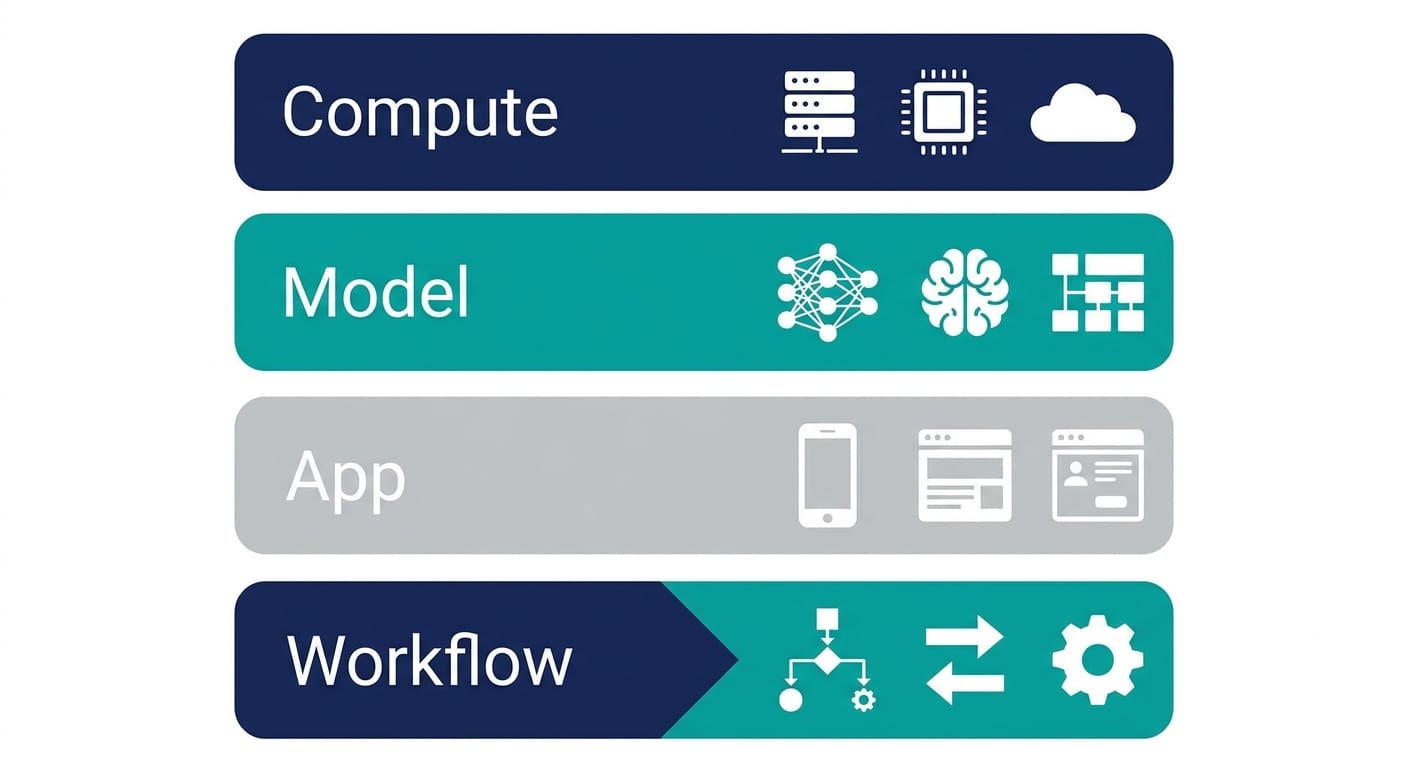
Build products that attach to coding workflows: testing automation, compliance checks, security scanning, internal tool generators, or agent orchestration. If the dev workflow wins, everything upstream/downstream gets pulled in.
What’s next?
If this near-trillion-dollar AI era is real, the next fight isn’t “Claude vs GPT vs Gemini.” It’s who owns the work: coding, customer support, analytics, security, marketing ops—pick your battlefield.
Thought-provoking question to leave you with: if one AI vendor becomes the default “employee” inside companies, where does that leave your product—platform, plugin, or replaceable feature?
Sources
- Broadcast clip reposts summarizing: “Anthropic raises $65B at $965B valuation” (as surfaced in search results).[1]
- Short-form video segment repeating funding/valuation headline (as surfaced in search results).[2]
- Reposted clip summarizing investors and valuation claim (as surfaced in search results).[3]