Anthropic says AI could start improving itself. So… why drop that right before an IPO?
Anthropic says Claude now writes over 80% of its production code and warns AI could start improving itself. The message might be a real safety flare—or very convenient timing ahead of an IPO. Here’s what it means for entrepreneurs using AI tools.

Over 80% of Anthropic’s production code is now written by Claude. Not drafted. Not brainstormed. Merged into production. And their engineers are shipping roughly 8x more code per quarter than before 2025.
Here’s the thing… that’s either a genuinely sobering safety signal, or the cleanest pre-IPO narrative setup in tech this year. Possibly both.
What Anthropic actually said (and why people are freaked out)
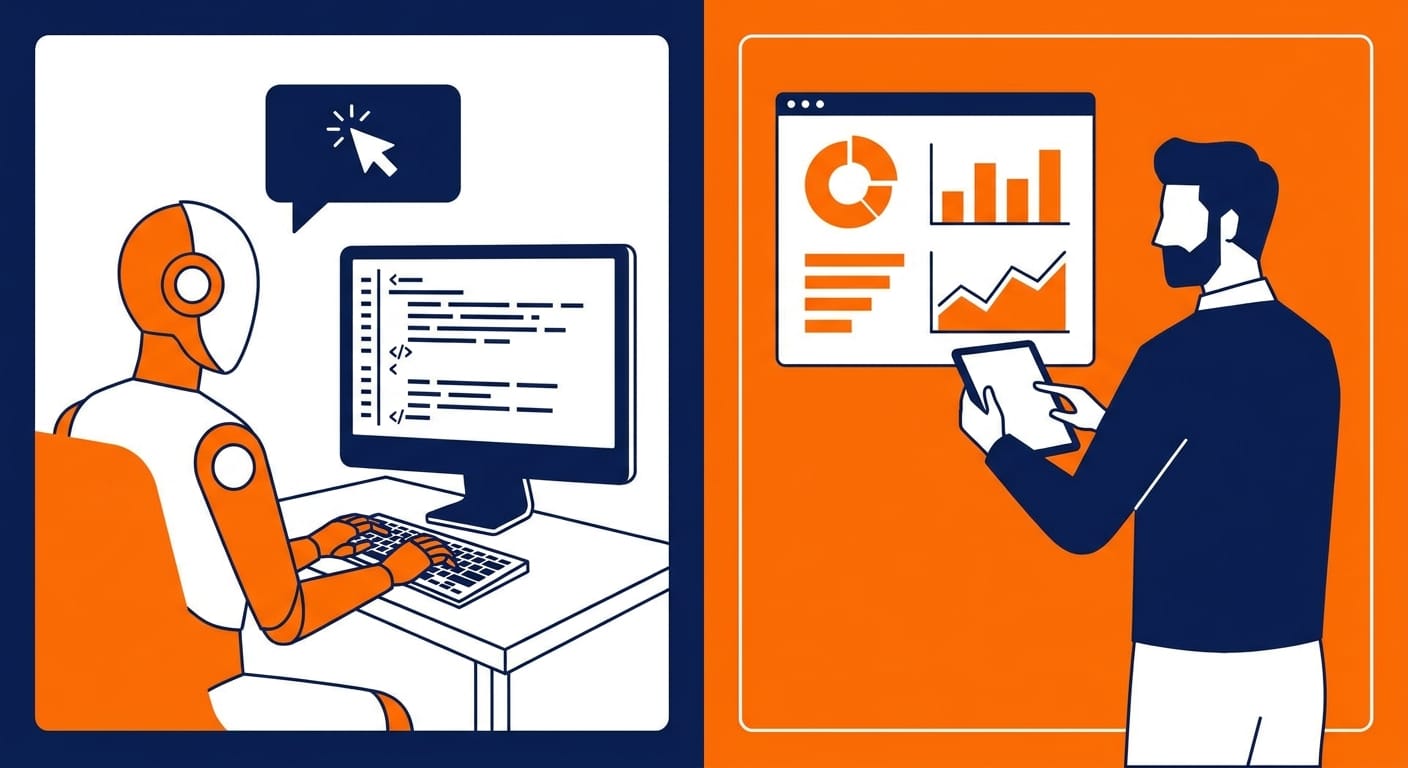
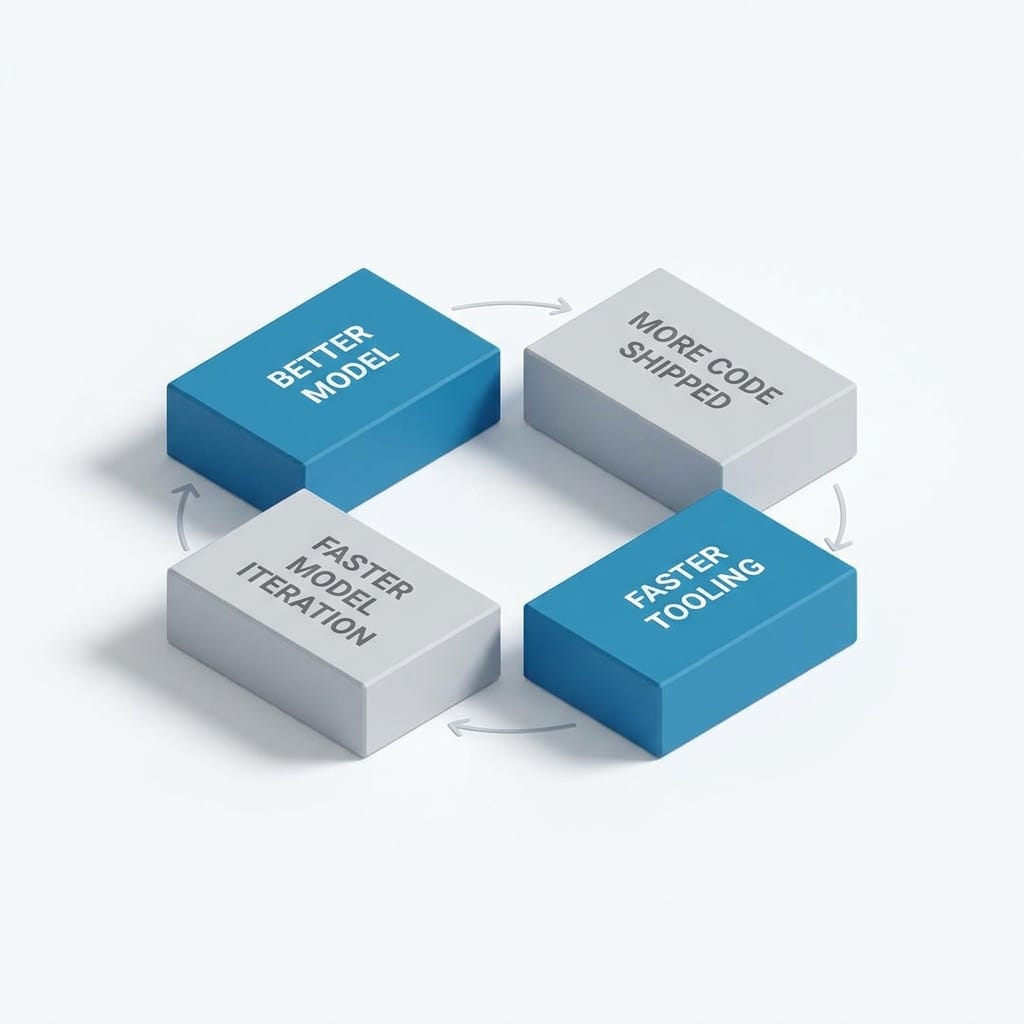
On June 4, Anthropic’s research arm (the Anthropic Institute) published a ~9,000-word essay called When AI Builds Itself, authored by Anthropic co-founder Jack Clark and institute head Marina Favaro. The headline idea: AI-assisted AI development is accelerating toward “recursive self-improvement”—a feedback loop where AI helps build the next, better AI, which then speeds up building the next one, and so on. [1][4][8]
In plain English: the “rate limiter” on progress shifts from humans making decisions and writing code to compute and automation. That’s the part that can get spicy.
Stats Spotlight: the numbers Anthropic put on the table
- >80% of code merged into Anthropic production systems is now written by Claude. [1][4][8]
- ~8x more code shipped per engineer per quarter vs. pre-2025. [1][4][8]
- They explicitly frame this as early evidence of a self-reinforcing improvement loop. [1][4][7]
Look, I’ll be honest… if you run any kind of product org, you read “8x code shipped” and your brain immediately goes: “Cool, we’re all behind.” But Anthropic’s point is: if that same acceleration hits the model-building loop itself, things could move too fast to supervise.
The “global brake pedal” idea (and why it’s not as simple as it sounds)
Anthropic doesn’t call for an immediate stop, but they do push a notable concept: build infrastructure for a coordinated, verifiable global pause on frontier AI development if things start tipping into unsafe territory. They’ve described this as creating a “brake pedal.” [2][3][7]
Here’s what most people miss: they’re also clear they won’t unilaterally pause if other labs keep going. The ask is basically: “Let’s create a system where everyone can slow down at once, and we can verify it.” [1][3]
That’s reasonable in theory. In practice, it’s like proposing a neighborhood speed limit… for Formula 1 cars… driven by competitors… on a track with no police.
The timing is suspicious (and yeah, people noticed)
This is where the debate really splits into two camps.
Camp A: “They’re genuinely warning us”
This camp says: the trajectory is real. Agentic coding is already changing how software gets built, and it’s not crazy to imagine the next step is AI doing larger chunks of AI R&D work—experiments, evals, refactors, training pipeline changes—faster than humans can meaningfully oversee. The essay is a shot across the bow. [1][4][7]
Camp B: “This is pre-IPO narrative jiu-jitsu”
Others point out two awkward facts:
- Reports say Anthropic recently filed for an IPO targeting a valuation approaching $1 trillion. [5][8]
- Reporting also notes Anthropic has softened or removed at least one key safety commitment in its Responsible Scaling Policy updates—then immediately ships a high-drama warning about runaway progress. [1][8]
So skeptics hear: “AI is getting scary fast, we might need a pause… also we’re the responsible grownups… also please value us at a small country’s GDP.”
The bottom line is… both things can be true. The risk can be real and the messaging can be convenient.
The part you actually care about: what this means for small business owners
If you’re in the Amplify AI Workshop world—entrepreneurs, creators, marketers—this isn’t a “stop using AI tools” moment. It’s a “use them like a professional” moment.
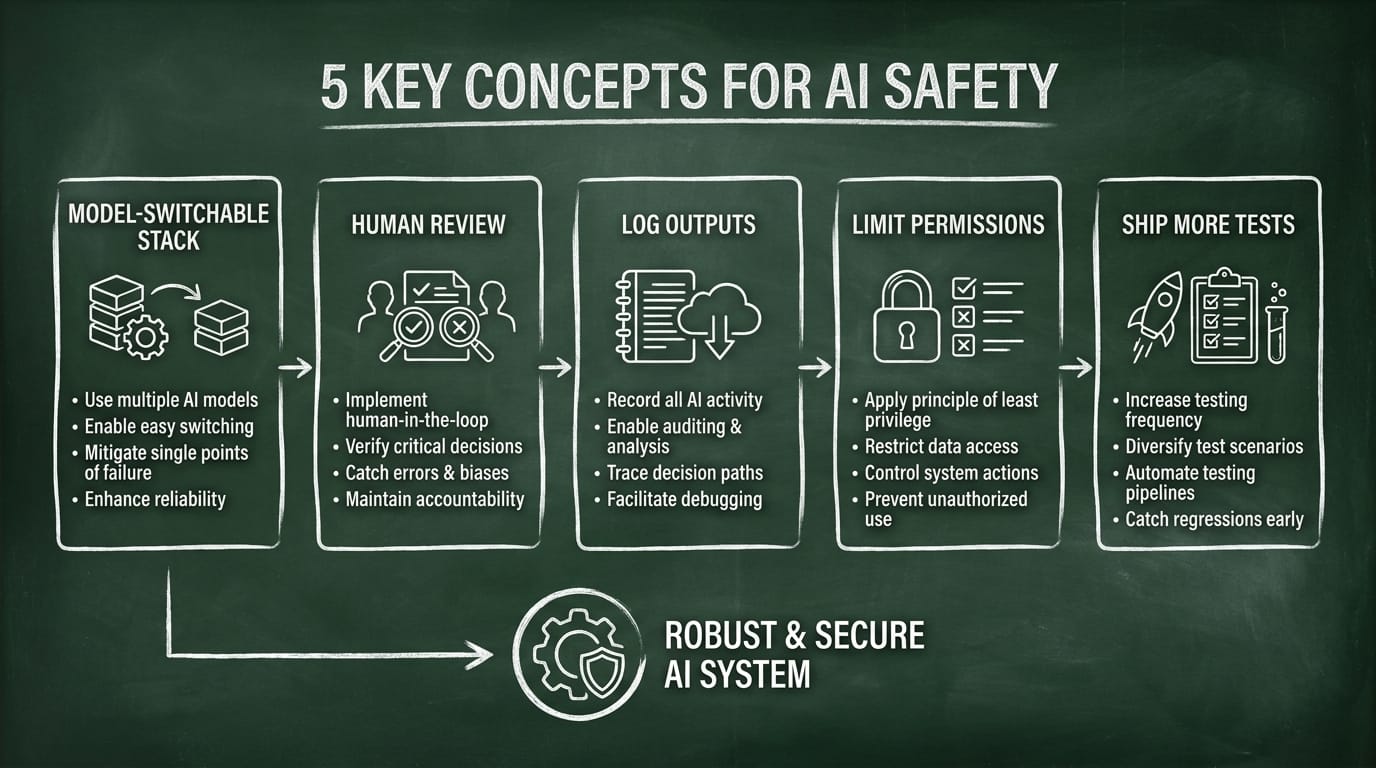
5 practical moves I’d make in the next 6–12 months
- Build a model-switchable stack. Don’t weld your business to one provider’s weird UI feature. Use modular tools/APIs so you can swap models if pricing, policy, or availability changes.
- Keep humans in the loop where it can hurt you. Anything public, financial, legal-ish, or brand-sensitive gets review. Always.
- Log what the AI did. Save prompts, outputs, and versions. Treat it like bookkeeping for automation.
- Restrict permissions like you would for a contractor. Your AI agent doesn’t need access to everything. Segment accounts, files, and automations.
- Exploit the upside: ship faster, test more. The real advantage isn’t “AI content.” It’s the volume of iterations you can run—ads, landing pages, hooks, offers, onboarding emails.
FAQ
Does “recursive self-improvement” mean today’s Claude is building the next Claude?
Not autonomously. Anthropic’s claim is more like: AI is now doing a large share of the engineering work that supports AI systems, and that can create a fast feedback loop. Humans still approve and steer—today. [1][4][8]
Should I stop using Claude / ChatGPT for my business?
No. Use them. Just don’t give them unchecked control over money, publishing, or sensitive data. (Same rule you’d use with a new hire on day one.)
Is the “global brake pedal” realistic?
It’s politically hard, but the key idea is worth tracking: monitoring compute, eval standards, and a verifiable way to coordinate a pause if needed. That conversation is now mainstream because big labs are pushing it. [2][3][7]
What’s the biggest risk for small businesses right now?
Platform risk and over-automation. Pricing changes, policy changes, and quietly broken automations will do more damage to most businesses than sci-fi doom scenarios.
What’s next
If Anthropic is right, the next 1–3 years will be a weird mix of: better tools, faster shipping, more regulation talk, and more “wait, they changed the rules again” moments. So the smart play is to be calm, opportunistic, and modular.
And maybe ask yourself one uncomfortable question: if your competitors can ship 5–10 experiments a week because AI does the grunt work… can you afford to ship one?
Sources
- [1] The Information — reporting on Anthropic essay claims (Claude writes >80% of merged production code; safety policy context).
- [2] Future of Life Institute — discussion/coverage of “brake pedal” / pause framing and safety implications.
- [3] Public policy coverage summarizing Anthropic’s coordinated, verifiable pause concept and compute governance proposals.
- [4] Axios — coverage of “When AI Builds Itself” and the acceleration/feedback-loop framing.
- [5] Business press coverage (e.g., WSJ/Fortune/CNN) — reports on Anthropic’s IPO filing and valuation expectations.
- [7] Mainstream science/tech coverage (e.g., Scientific American) — broader framing of recursive self-improvement and control risks.
- [8] Mixed outlet coverage (WSJ/Fortune/Al Jazeera and others) — notes on timing controversy, IPO context, and safety commitment changes.