Stop “Watching” YouTube Dev Videos—Start Mining Them for Code
YouTube is a terrible database. Here’s a simple 5-step workflow (and tools) to turn any dev video—like the one you linked—into searchable notes, extracted code, and a post you can actually ship.
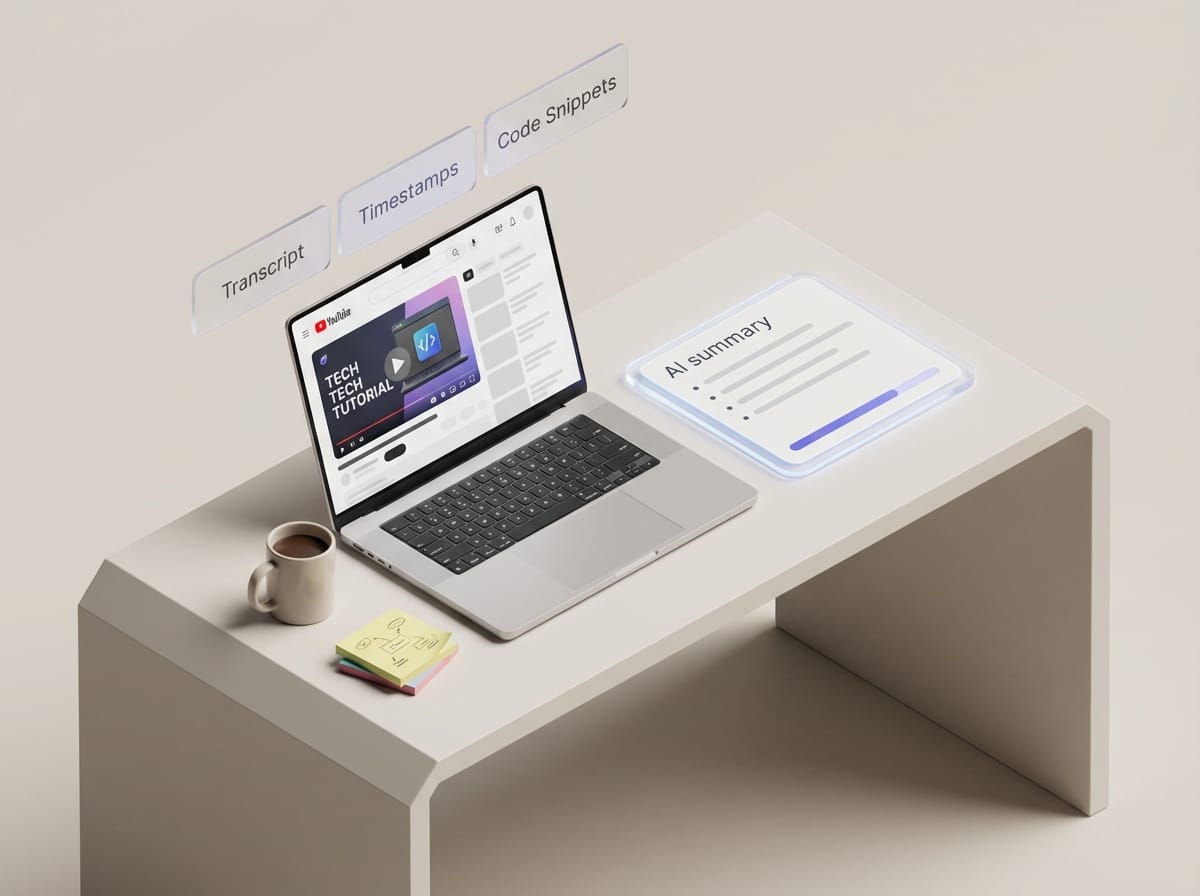
Ever notice how a “quick” YouTube coding video somehow turns into a 47-minute detour… and you still don’t have the snippet you needed?
Yeah. Same.
Here’s my hot take: watching YouTube is a terrible way to learn specific dev info. Searching, extracting, and turning it into notes you can actually use? That’s the move. And AI makes that stupidly easy—even when you don’t have a transcript handy.
The problem: video is the worst “database” ever
YouTube is amazing for vibes and context. It’s awful for:
- Finding the one command that fixes your bug
- Extracting an architecture pattern from a 60-minute talk
- Remembering what you watched two weeks later
- Sharing the “good part” with your team without sending them on a time-sink quest
Video is linear. Coding is not. When you’re building, you want random access—like a repo, not a movie.
And here’s the annoying wrinkle with your specific request: I don’t have reliable public research data for that exact video (https://youtu.be/AO5aW01DKHo) in the provided dataset, so I can’t pretend I watched it and recap it like some kind of content cosplayer. What I can do is show you the playbook AI coders are using to turn any YouTube video into something searchable, quotable, and actionable.
The solution: treat YouTube like raw input for your AI pipeline
Instead of “I’m going to watch this,” think: “I’m going to ingest this.”
Like a mini ETL pipeline:
- Extract: pull transcript / chapters / timestamps
- Transform: summarize, tag, pull code, generate tasks
- Load: drop into Notes/Notion/Obsidian/Jira/GitHub
Once you do that a few times, you’ll never go back to raw watching unless you’re eating lunch.
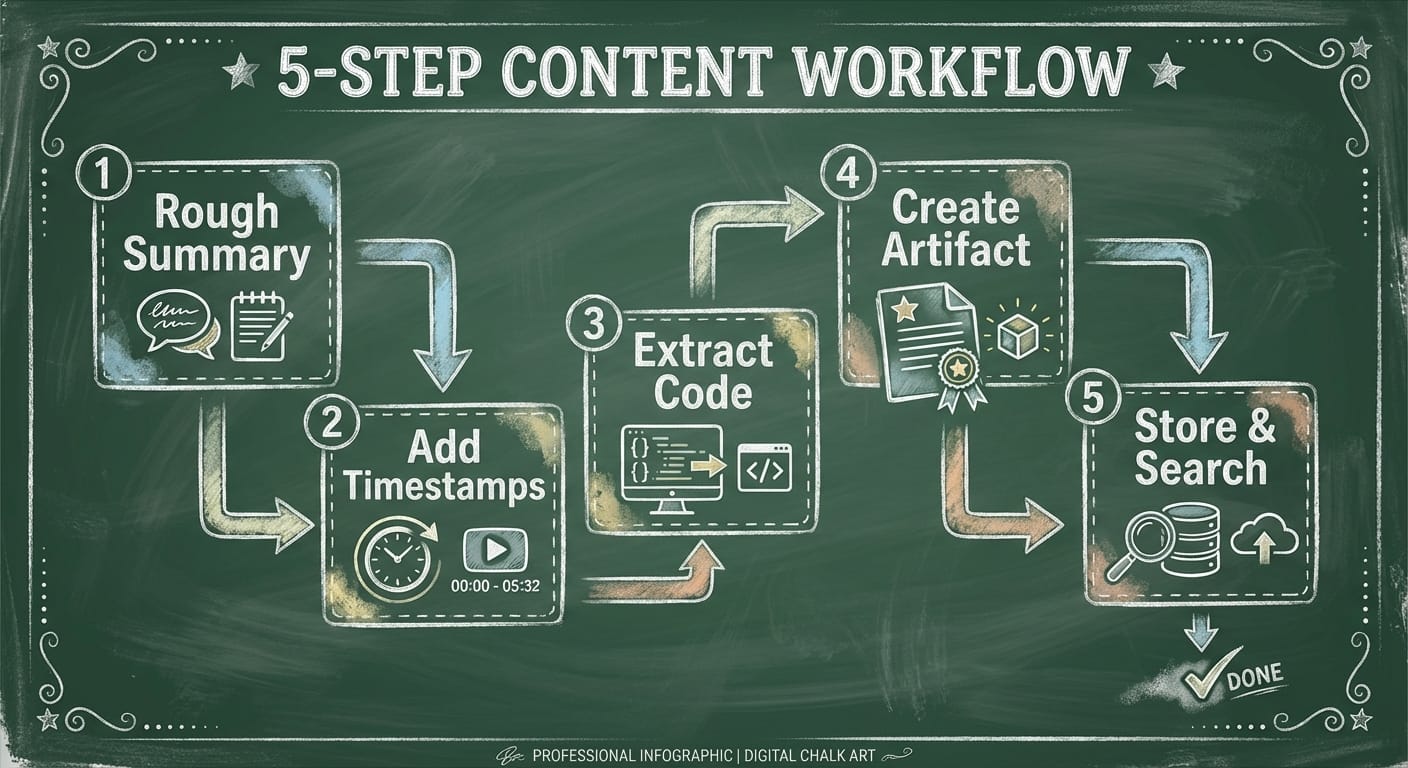
My 5-step workflow to summarize a YouTube video like a coder
This is what I recommend when you want a post (or just solid notes) based on a YouTube video—including the one you linked.
Step 1: Generate a fast “rough cut” summary
Use something like summarize.tech: paste the URL, get a sectioned summary fast. It’s not perfect, but it answers the key question: is this video even worth deeper extraction?
If the rough summary looks thin, you just saved yourself 45 minutes. If it looks promising, move on.
Step 2: Grab timestamps + structure (chapters are gold)
The best summaries aren’t paragraphs—they’re structured notes. If your tool outputs timestamps/sections, keep them. If not, look for YouTube chapters or generate them with an extension.
Why? Because timestamps are “citations” you can jump back to when you need to verify details or pull exact phrasing.
Step 3: Extract code + commands as first-class output
If it’s a dev video, you don’t just want a summary—you want:
- Code snippets
- Shell commands
- Config blocks
- API endpoints
- Error messages + fixes
Some tools can do this directly, but you can also copy transcript text into ChatGPT/Claude and ask: “Pull out every code block and command, and label it with the timestamp.”
That one prompt turns a video into something repo-adjacent.
Step 4: Convert the summary into a reusable artifact
Pick your target format:
- Blog post: teach + opinion + steps
- Internal doc: decisions + tradeoffs + links
- Checklist: do-this-next tasks
- PRD notes: requirements + constraints
This is the difference between “I learned something” and “my team benefits from it.”
Step 5: Store it somewhere searchable (and actually use it)
If your notes die in a random Google Doc, they’ll never be seen again. Put them somewhere you already search:
- Obsidian vault
- Notion database
- GitHub repo (/notes folder works fine)
- Even a private Slack channel
My personal bias: Obsidian or a repo. If I can’t grep it, it doesn’t exist.
Pro Tips Box: make the AI do the annoying parts
Pro tip #1: Ask for “skeptical summaries.” I like: “Summarize this, but also list what’s missing or questionable.”
Pro tip #2: Force output structure: “Give me headings, bullets, and a final checklist.”
Pro tip #3: If it’s tutorial content, ask for a “minimum viable reproduction” project outline (files + commands).
Tool recommendations (the practical stuff)
Based on the research data you provided (and what’s popular in the wild), here are solid options:
- summarize.tech — quick URL-in, summary-out. Great for triage.
- YouTube Summary with ChatGPT & Claude (Chrome extension) — handy for in-browser notes with timestamps.
- Glasp — good for annotation/note workflows.
- NoteGPT — another free-ish summarization route.
- Monica.im — GPT-powered summarization/assistant style workflow.
What I like about these: they’re not trying to be fancy. They’re trying to save time. That’s the correct goal.
Common mistakes I see AI coders make with video summarization
- Mistake #1: trusting the first summary. Summaries hallucinate. Use timestamps to sanity-check.
- Mistake #2: saving walls of text. If it’s not scannable, it’s not usable.
- Mistake #3: not extracting artifacts. If it’s a coding video, pull code/commands first.
- Mistake #4: not shipping anything. Turn it into a doc, checklist, or post. Otherwise it’s trivia.
FAQ
Can you write the post directly from the video link?
I can write the post framework and workflow (like this one), but without the actual transcript/summary content for that specific video, I won’t pretend I know its exact points. If you paste the transcript or a tool-generated summary here, I’ll turn it into a clean Marty-style post fast.
What’s the fastest way to get the transcript?
Use a summarizer that pulls it automatically, or copy YouTube’s transcript (when available) and feed it to your LLM.
How do I get better results from the LLM?
Ask for structure: “Give me key ideas, code snippets, pitfalls, and a checklist.” And request timestamps if you have them.
Is this worth it for short videos?
Sometimes. For anything over ~8 minutes, yes. For anything over ~20 minutes, absolutely.
Action Challenge: do this with the video you linked
Here’s what I’d do today if I were you:
- Run https://youtu.be/AO5aW01DKHo through summarize.tech (or your favorite tool).
- Paste the resulting summary into your notes.
- Ask your LLM: “Extract code/commands and convert this into a 1-page checklist.”
- Turn that into your blog post outline.
- Send it to a friend or coworker and ask: “Did this save you time?”
If the answer’s “yes,” congrats—you just turned YouTube from entertainment into leverage.