Your Internet Is a Battlefield Now (So Here’s the Playbook)
The internet isn’t a guaranteed utility anymore—it’s a leverage point. Here’s a simple 5-layer resilience plan to stay connected (and sane) through outages, storms, or shutdowns.

Over 300 internet shutdowns in 54 countries in just two years. That’s not “somewhere far away” news anymore—that’s the early warning siren that the internet is becoming part of the battlefield, right alongside roads, ports, and power grids. And if you watched that video and felt the creeping, “Wait… could this happen to me?” feeling—yeah, same.
Here’s my take: a modern “shutdown” isn’t just flipping a big red switch labeled INTERNET. It’s more like a messy toolbox—throttling mobile data, blocking apps, cutting power to key areas, or “temporary maintenance” that lasts… conveniently long. And the reason it works is simple: most of us built our lives on one brittle assumption—connectivity is always on.
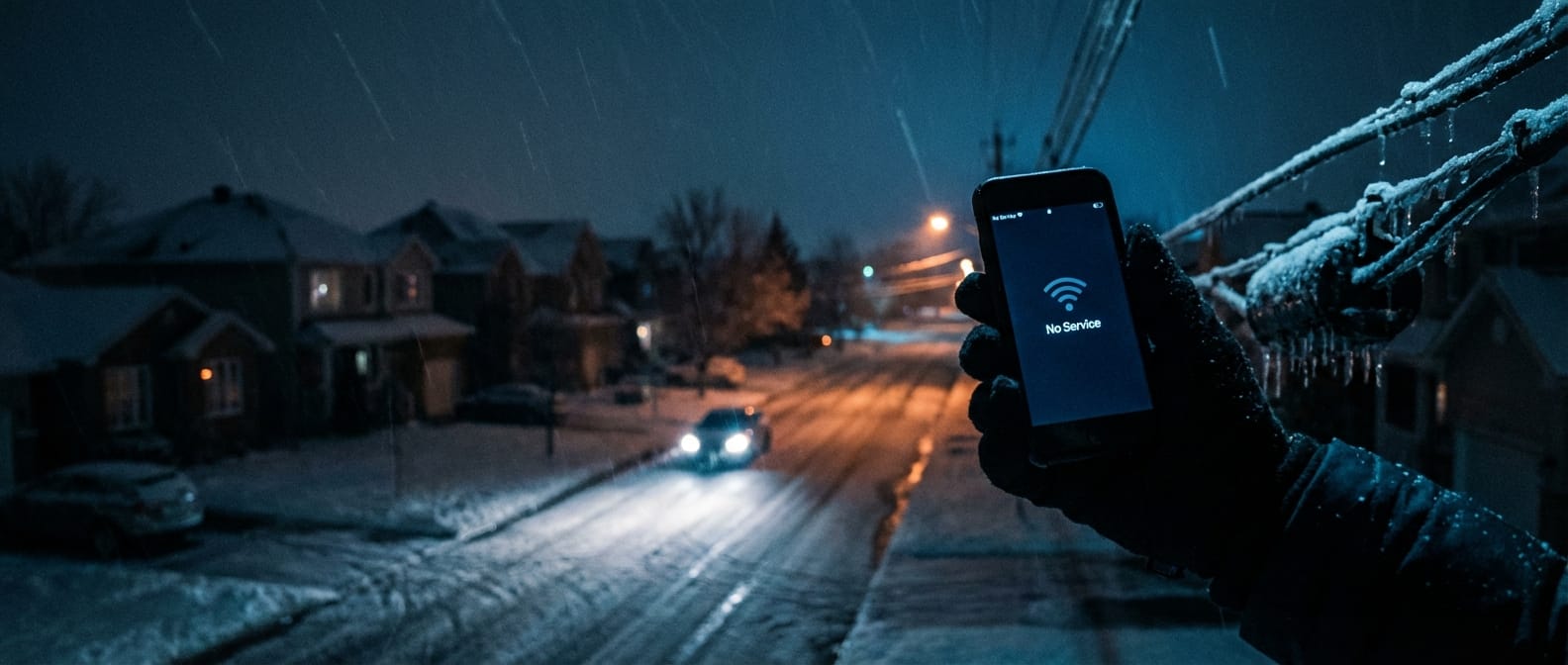
This post is inspired by the video’s core vibe: the internet isn’t guaranteed, and the smart move is to build resilience the same way you’d keep a flashlight and extra batteries for a winter storm. Speaking of winter storms… nearly 200 million Americans are on alert for a potentially catastrophic system right now. Heavy snow, ice, brutal cold, the whole 2,000-mile mess. If you think “digital disruption” is only political, Mother Nature would like a word. [3]
The problem: the internet is now critical infrastructure (and a leverage point)
We’re watching conflicts where civilian life gets squeezed from every angle—power, heat, logistics, and yes, connectivity.
- Russian strikes across Ukraine left hundreds of thousands without electricity and heating during freezing temperatures. That’s not just a humanitarian issue—it’s also a communications issue. No power often means no network. [1]
- The UN is warning about rising government-enforced internet shutdowns—300+ incidents across 54 countries over two years—because it threatens freedom of expression and human rights. [1]
- And when things get tense (Ukraine-Russia, Israel-Palestine, potential flashpoints like China-Taiwan), information becomes a weapon—controlling it becomes strategy. [1]
So what do you do with that? You don’t panic-buy tinfoil. You build a plan that lets you operate when your “normal” tools stop working. The same way businesses do disaster recovery—just scaled down to a human level.
The solution: a 5-layer “digital resilience” stack you can actually do
Let’s make this practical. Here’s the framework I recommend, and yes, it’s boring on purpose. Boring plans work under stress.
1) Power: keep your devices alive
No power = no comms. It’s that simple. If you live somewhere with winter storms, heatwaves, or shaky infrastructure, treat power like oxygen.
- Buy a decent power bank (20,000mAh is a solid baseline).
- Keep a car charger in your glovebox.
- If you can swing it, a small battery backup (UPS) for your router is magical.
2) Connectivity: don’t bet on one network
Most people have a single point of failure: one phone carrier, one home ISP, one Wi‑Fi router that dies if you look at it funny.
- Have at least one alternate path: a second SIM/eSIM, or a prepaid hotspot.
- Know where public Wi‑Fi is nearby (libraries still quietly carry society, by the way).
- Understand that shutdowns can be “soft”: throttling, selective app blocks, DNS tampering.
3) Information: cache what you’ll need
When the network disappears, your brain becomes the cloud. So give it some help.
- Offline maps for your area.
- Saved critical docs (IDs, insurance, medical info) in encrypted storage.
- A printed sheet of emergency contacts (yes, printed—welcome back to 1998).
4) Communication: pick “shutdown-tolerant” channels
During crises, you want options that don’t all fail the same way.
- Normal texting (SMS) can sometimes work when data doesn’t.
- Encrypted messaging is great—until the app is blocked.
- For families: set a simple “if X happens, we meet at Y” plan. Don’t rely on real-time coordination.
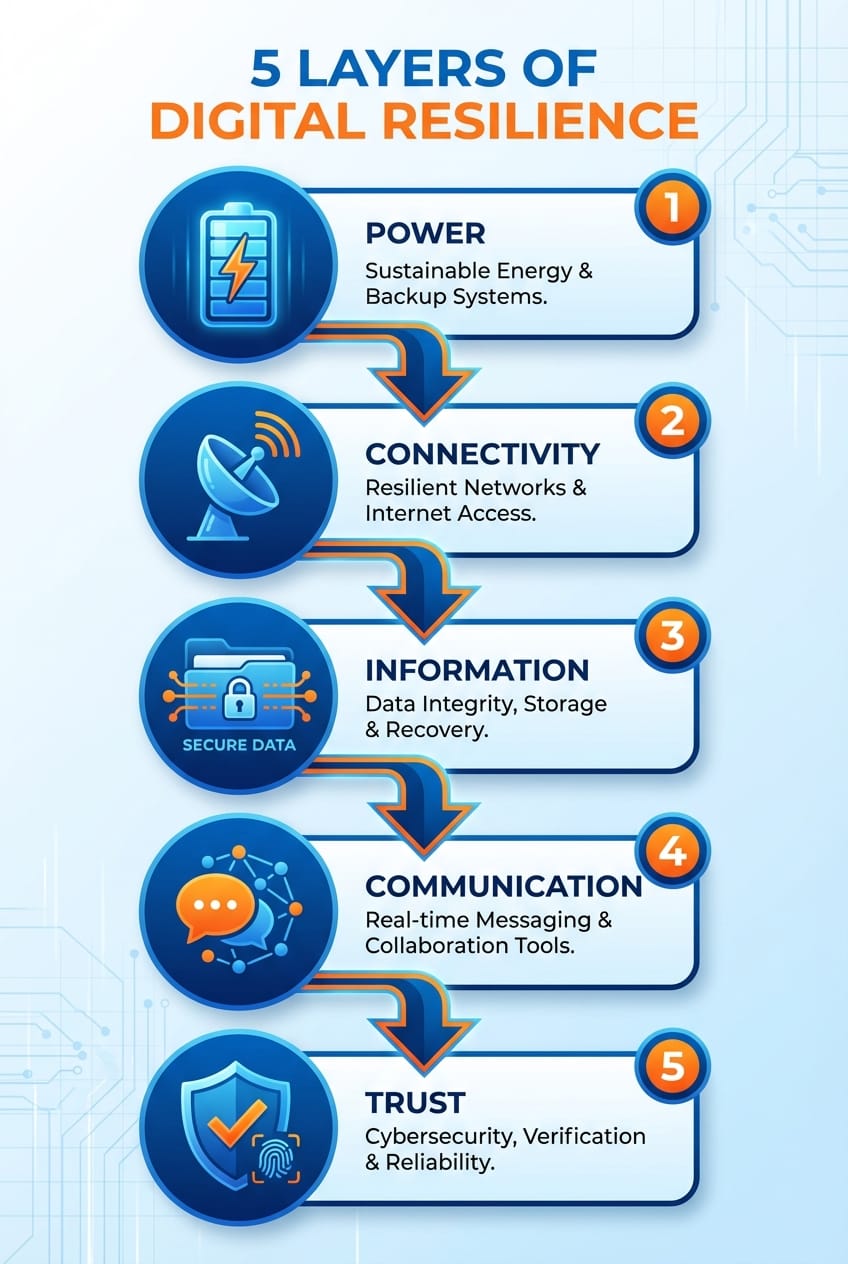
5) Trust: verify before you share
This is the layer everyone ignores because it’s not a gadget. But misinformation spreads fastest when people are cold, scared, and scrolling.
- Cross-check breaking news with at least two reputable sources.
- Watch for recycled images, old videos, and “a friend said” rumors.
- If you’re not sure, don’t amplify it. You’re not CNN. You’re Steve from accounting.
Pro Tips Box
Pro tips from someone who hates being unprepared:
- Practice once: put your phone in airplane mode and see what you can still access offline.
- Battery hygiene matters: low-power mode + dim screen buys you hours.
- One family checklist: pick one meeting point and one out-of-town contact everyone can call.
Common mistakes (don’t be this person)
- “I’ll just use the cloud.” The cloud is awesome until you can’t reach it.
- “I’ll remember numbers.” No, you won’t. Save and print the important ones.
- “It’s fine, it won’t happen here.” Tell that to the folks staring at an ice-coated street and a dead router. [3]
FAQ
Are internet shutdowns only about authoritarian governments?
Nope. Governments are a big driver (the UN is explicitly warning about that trend), but outages can also come from storms, cyberattacks, and infrastructure failures. [1][3]
What’s the difference between a shutdown and an outage?
An outage is often accidental (weather, equipment failure). A shutdown is typically deliberate or policy-driven (blocking, throttling, cutting access). In real life, the user experience is identical: you’re offline.
What should I buy first if I buy nothing else?
A quality power bank and a cheap backup connectivity option (prepaid SIM/hotspot). Power + alternate path solves an embarrassing amount of problems.
Why are these issues showing up more now?
Because connectivity is leverage. In conflicts and political flashpoints, controlling communication can shape narratives and coordination. And with climate extremes—like heatwaves made more likely by human-caused climate change—basic infrastructure stress is rising too. [5]
Thought-provoking question
If your internet vanished for 72 hours—storm, shutdown, whatever—what breaks first: your work, your family plan, your finances, or your sense of what’s true?
Sources
- UN/global brief on conflicts, attacks on UN personnel, and rising internet shutdowns (300+ incidents in 54 countries). [1]
- Ukraine diplomacy updates including proposed tariff-free zone discussions. [2]
- US winter storm alert impacting nearly 200 million Americans. [3]
- ICE actions and TPS-related enforcement concerns in Maine. [4]
- Climate change attribution for Australia heatwave; fossil fuel company emissions concentration; High Seas Treaty updates. [5]