Google Lyria 3 in Gemini: The 30-Second Song Factory Is Real
Google’s Lyria 3 inside Gemini can generate polished 30-second songs from text or images—complete with instruments, vocals, and lyrics. Here’s what it can do, where it fits in your workflow, and the ethical guardrails Google’s putting around it.

Imagine this: you’ve got a YouTube Short to post in 20 minutes, your footage is solid, and then you hit the classic wall… “What music am I allowed to use without getting nuked by copyright?” Now imagine you upload a photo from your shoot, type one sentence, and Gemini spits out a polished 30-second track—beat, instruments, vocals, and even lyrics—while you’re still sipping your coffee.
That’s basically what Google’s Lyria 3 is doing inside the Gemini app. And yes, it’s as wild (and useful) as it sounds.
The problem: music is easy to want, hard to ship
Here’s the thing… most creators don’t actually need a full 3:42 radio single. They need 30 seconds of vibe that fits the edit. The “hard part” isn’t making music—it’s making the right music:

- Rights-safe (no copyright surprises later)
- Fast (because deadlines don’t care about your creative journey)
- On-brand (not generic corporate ukulele #7)
The solution: Lyria 3 as your on-demand soundtrack button
Google says Lyria 3 is an advanced AI music generation model integrated into the Gemini app that can generate high-quality 30-second tracks from text or image prompts—worldwide for users 18+.[1][2][3]
And it’s not just instrumentals. Lyria 3 can generate instrumentation, vocals, and lyrics, quickly. You can prompt it with something absurdly specific like “a comical R&B slow jam about a sock finding their match,” and it will actually try to deliver the whole thing.[2][3]
What Lyria 3 can actually do (aka: the fun part)
Look, I’ll be honest… most AI music tools sound impressive until you try to steer them. Lyria 3’s big win is it gives you creative control knobs normal humans can use. According to reports, you can customize things like genre, style, tempo, rhythm, and vocal characteristics—and it can also generate lyrics automatically from your prompt.[2][5]
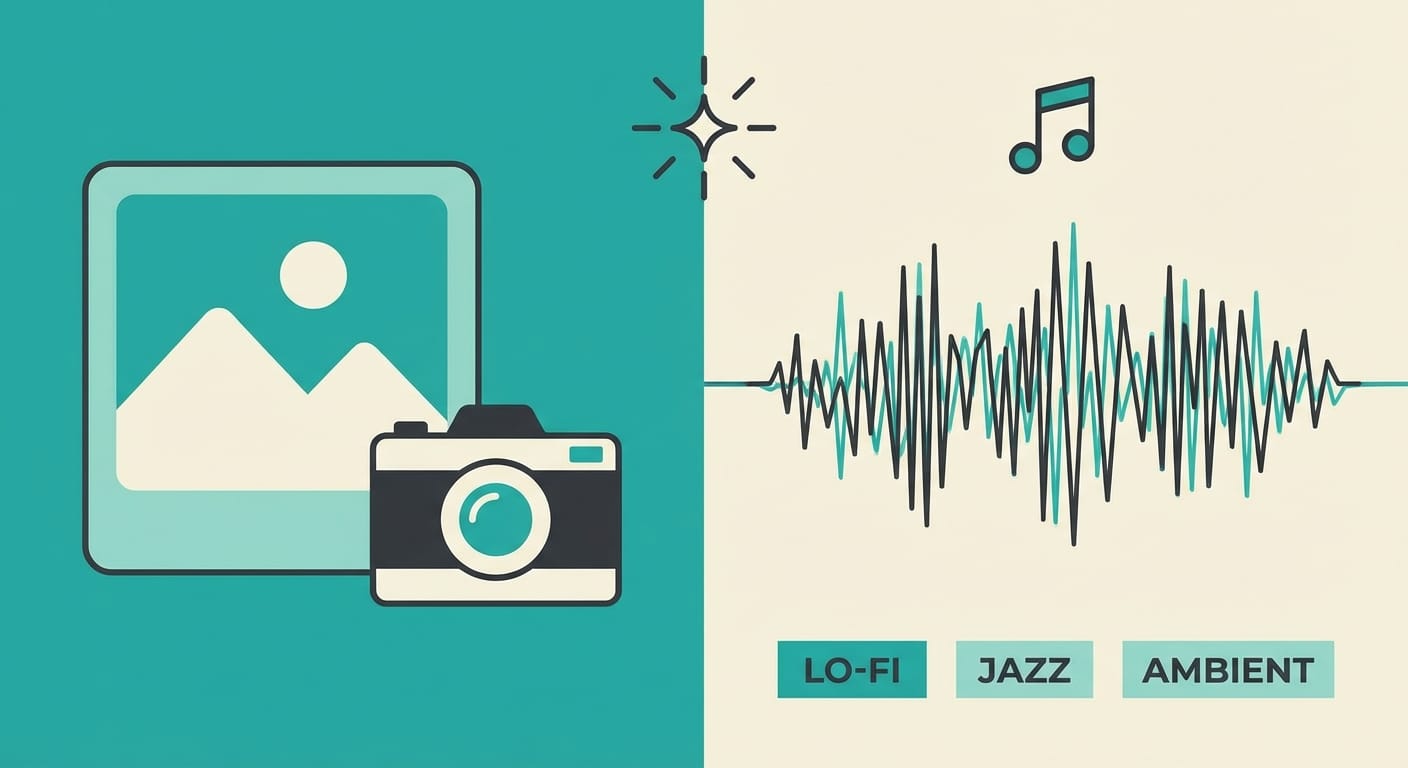
Here are the standout capabilities that matter if you make content (or music) for a living:
- 30-second “finished” tracksBuilt for Shorts/Reels/TikTok pacing, background beds, bumpers, intros, and transitions.[1][4]
- Text promptsDescribe mood + genre + instruments + scene. The more specific, the better.[2]
- Image prompts (multimodal)Upload an image and ask Gemini to generate music that matches the vibe of what’s on-screen.[1][2]
- Vocals + lyricsNot just “la la” placeholders—actual words, in multiple languages (English, German, Spanish, French, Hindi, Japanese, Korean, Portuguese).[3]
- Cover art includedGenerated tracks can come with album-style cover art made with Google’s Nano Banana image model.[4]
Here’s what most people miss: this is a workflow tool, not a “replacement band”
If you’re a musician, it’s tempting to see Lyria 3 as the enemy. I don’t. I see it like a drum machine with a marketing degree. It’s best when you treat it as:
- a sketchpad (rapid idea generation)
- a content accelerant (custom background music on demand)
- a prototype engine (demo a direction before booking studio time)
Also, the 30-second constraint is a clue. Google’s aiming this at short-form creation, not album-length artistry.[4]
The bottom line is… Lyria 3 is a “get me something usable right now” button for creators—especially if your primary deliverable is video, not a Spotify release.
Ethics and safeguards (the part you can’t ignore)
Any AI music generator immediately raises two questions: “Is this trained on artists without consent?” and “Will it copy someone’s song?” Google’s public positioning is that it’s building guardrails:
- No direct artist mimicry: if you name a specific artist, Lyria 3 aims for similar style/mood rather than direct imitation.[1][3]
- Content filtering + reporting: outputs are checked against existing content, and users can report potential copyright issues.[2]
- SynthID watermarking: tracks embed an imperceptible watermark to identify content as AI-generated.[2][3]
- Detection: Gemini can help check if uploaded audio was generated using Google AI (via SynthID detection).[2]
Does that solve every ethical concern? No. But it’s more than “good luck, creators.” It’s at least an attempt to keep this from turning into a musical identity theft machine.
Case study snippet (hypothetical, but painfully real)
Say you run a small channel reviewing guitar pedals. You shoot a 28-second montage of knob-twiddling B-roll. Instead of hunting a royalty-free funk loop, you:
- upload a frame of the neon-lit pedalboard,
- prompt: “tight modern funk, 102 bpm, punchy bass, clean rhythm guitar, no vocals,”
- get a track that matches your lighting and vibe.
You just saved 45 minutes and avoided a licensing headache. That’s the “impact” in the real world.
Quick Wins: prompts that actually get better results
- Use “camera words” for mood: “cinematic,” “lo-fi,” “sunset,” “neon,” “dusty vinyl.”
- Call your role: “background music,” “intro sting,” “transition bumper.”
- Constrain the chaos: “no vocals,” “minimal drums,” “one lead instrument.”
- Give tempo or energy: “90 bpm,” “high energy,” “slow burn.”
- Reference instruments, not artists: “808s,” “nylon guitar,” “analog synth pads.”
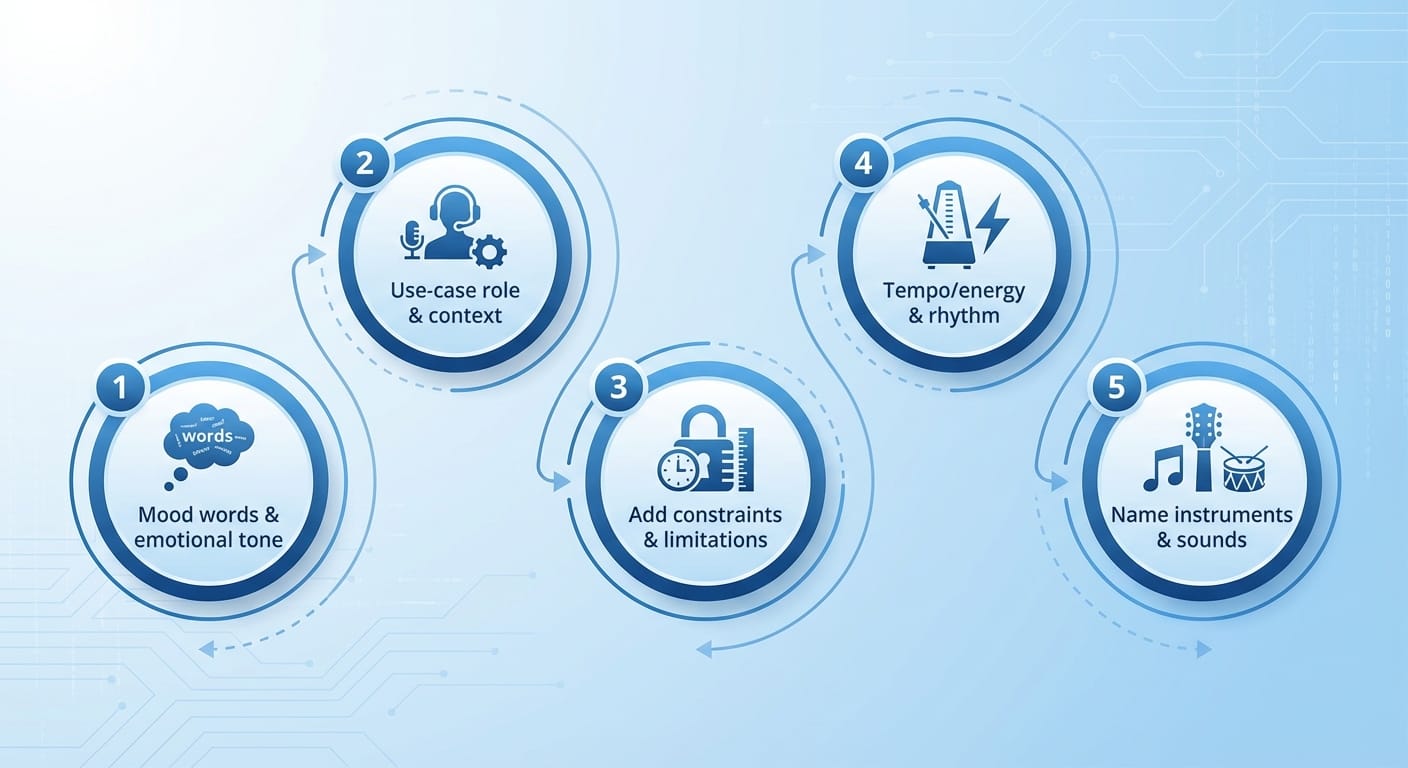
Those five tweaks alone can turn “AI mush” into something you’d actually ship.
FAQ
Can Lyria 3 make full songs?
Right now it’s positioned around 30-second tracks, which makes it ideal for short-form content and musical snippets.[1][4]
Does it do vocals and lyrics?
Yes—Lyria 3 can generate vocals and lyrics from your prompt, and it supports multiple languages.[2][3]
Can I prompt it with a photo?
Yep. Gemini supports image-to-music prompting so the soundtrack can match the mood/context of the visual.[1][2]
What about YouTube creators?
Lyria 3 is also rolling into YouTube via Dream Track for creating soundtracks, expanding beyond the initial U.S.-only rollout.[2][3]
Action challenge
If you’ve got anything to post this week—Shorts, Reels, a teaser, a product demo—try this: generate three Lyria 3 tracks for the same clip using three different prompt angles (genre-first, instrument-first, mood-first). Pick the best one and ship it.
Because the real creative advantage isn’t “AI made a song.” It’s you getting to audition ideas at the speed of thought.
Sources
- Mashable — Google brings Lyria 3 to Gemini (text/image prompts, artist safeguards).[1]
- Google Blog — Create music in Gemini, safeguards like SynthID.[2]
- The Verge — Lyria 3 features, languages, YouTube Dream Track expansion.[3]
- Engadget — 30-second focus, cover art pairing, quality notes.[4]
- MusicRadar — Creative controls like tempo, style, vocal characteristics.[5]