5 Ghost CMS Moves That’ll Make Your Blog Faster, Smarter, and Way Easier to Monetize
Ghost CMS is built for creators who want faster publishing, built-in newsletters, and clean monetization. Here are 5 practical ways to use Ghost for better blogging—without turning your site into a plugin circus.
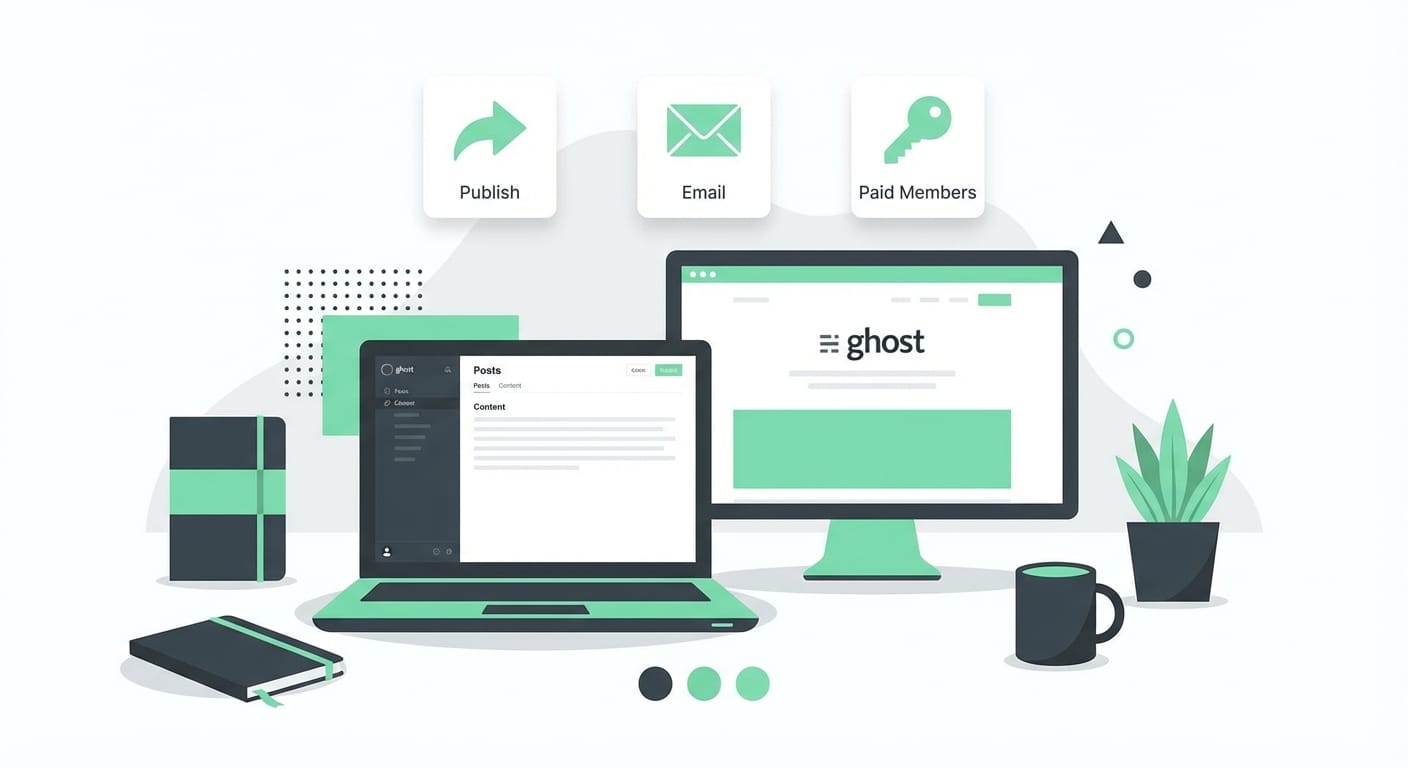
Hot take: most bloggers don’t need “more features.” They need fewer moving parts and a system that actually ships content (and revenue) consistently.
I’ve watched creators duct-tape together a theme, seven plugins, three pop-up tools, a newsletter platform, and a membership paywall… then act surprised when something breaks on launch day. Sound familiar?
Ghost CMS is my favorite “keep it simple without staying small” platform for creators who want to publish, grow an email list, and monetize—without turning their site into a fragile Jenga tower.
1) Self-host Ghost for real control (and grown-up scalability)

Let’s start with the spicy one: self-hosting. If you’ve never self-hosted anything, it can sound like you’re signing up to become a part-time sysadmin. You’re not—if you do it the smart way.
Why I’m pro self-hosting for serious creators:
- You control your costs. Instead of paying “platform tax” as you grow, you’re mostly paying for infrastructure you actually use.
- You control performance. Ghost is lightweight (Node.js-based) and fast when deployed cleanly.
- No vendor lock-in. Your content is yours, your domains are yours, your stack choices are yours.
Real-world analogy: hosting is like owning a food truck vs. renting a stall inside a mall. The mall is convenient… until they raise rent and tell you what hours you can be open.
Practical move: if you self-host, don’t get fancy. Use a reputable VPS, put Ghost behind a CDN, and automate backups. Your future self will send you a thank-you card.
Quick Wins (do these in 30 minutes)
- Turn on caching/CDN (Cloudflare is the usual suspect).
- Set a weekly automated backup to cloud storage.
- Use a staging environment if you’re changing themes or custom code.
2) Automate publishing + newsletters so “consistent” becomes your default
Most creators don’t have a writing problem—they have a distribution and consistency problem.
Ghost bakes in the stuff you normally glue together with tools:
- Scheduling: write when you can, publish when you should.
- Newsletter sending: publish a post and email it to your list from the same place.
- Segmentation: send different content to free subscribers vs. paid members (or specific segments).
- Email-only blocks: put bonus content in the email without cluttering the public post.
Here’s the mindset shift: treat your content engine like a coffee maker. You set it up once, and it keeps doing its job every morning. That’s automation.
Pro Tips Box
- Pick one “newsletter day.” Same day every week beats random bursts of genius.
- Write in batches. Draft 2–4 posts, schedule them, then go live your life.
- Create one paid-only section template. Reuse it so paid content is consistent and fast to produce.
3) Integrate Ghost with the social web + monetization tools (without plugin chaos)
If you’re doing content marketing in 2026, you’re not “blogging.” You’re running a content supply chain.
Ghost plays nicely here because a lot of the big stuff is either built-in or cleanly integrated:
- Social distribution: connect to platforms like Bluesky, Mastodon, Threads, Flipboard, and more to increase discovery without manually reposting everything.
- Payments: Stripe is the workhorse for memberships, paid subscriptions, and donations.
- Ads: yes, you can run Google AdSense if that fits your model (I’m not judging… much).
My opinion: integrations should feel like power steering, not a science experiment. If you need 19 plugins just to “share a post,” you’re not building a brand—you’re building a maintenance bill.
4) Customize your content experience with cards, tiers, and paywalls

Ghost’s editor is sneaky good. It’s not trying to be a Swiss Army knife the size of a canoe. It’s trying to help you publish clean, readable content that converts.
Customization that actually matters for creators:
- Rich cards: galleries, video embeds, accordions, markdown blocks—the stuff that makes content easier to consume.
- Membership tiers: create free vs. paid experiences without duct tape.
- Paywalls: gate content by public, members-only, paid-only, or email-only.
- Global-ready publishing: multi-language support and modern comments/spam controls for real communities.
Think of your blog like a gym. The equipment matters, sure. But memberships and tiers are how you keep the lights on.
Common Mistakes (don’t do this)
- Making everything paid. You need a free “front door” that proves you’re worth paying for.
- Hiding the good stuff. Tease the transformation, not just the topic. People pay for outcomes.
- Over-designing posts. If your post looks like a Vegas casino, readers bounce.
5) Scale your SEO + analytics like a marketer, not a gambler
If you’re creating content without measurement, you’re basically playing darts in the dark. Fun, but not profitable.
Ghost gives you strong fundamentals:
- SEO-friendly structure: clean code, sitemaps, and structured data support.
- Performance tracking: see what’s working across web traffic, email performance, signups, and conversions.
- Filtering/search: useful when your archive grows and you’re trying to answer “what topics actually convert?”
If you self-host, you can also run your preferred analytics setup and export data however you want. That’s huge once you start optimizing like a business.
Case Study Snippet (a realistic one)
Let’s say you run a niche newsletter for creators—something like “30-minute content systems.” You move to Ghost, add a free tier + a $10/month paid tier, and publish one article weekly.
- Week 1–4: focus on consistent scheduling + sending posts as newsletters.
- Month 2: add a paid-only section to every post (same template, minimal extra work).
- Month 3: use analytics to double down on the 2–3 topics driving the most paid upgrades.
That’s not “growth hacking.” That’s just building a repeatable machine.
The Bottom Line
If you want better blogging, Ghost isn’t about doing more. It’s about doing the right things—faster: publish, email, distribute, monetize, measure. Repeat.
FAQ
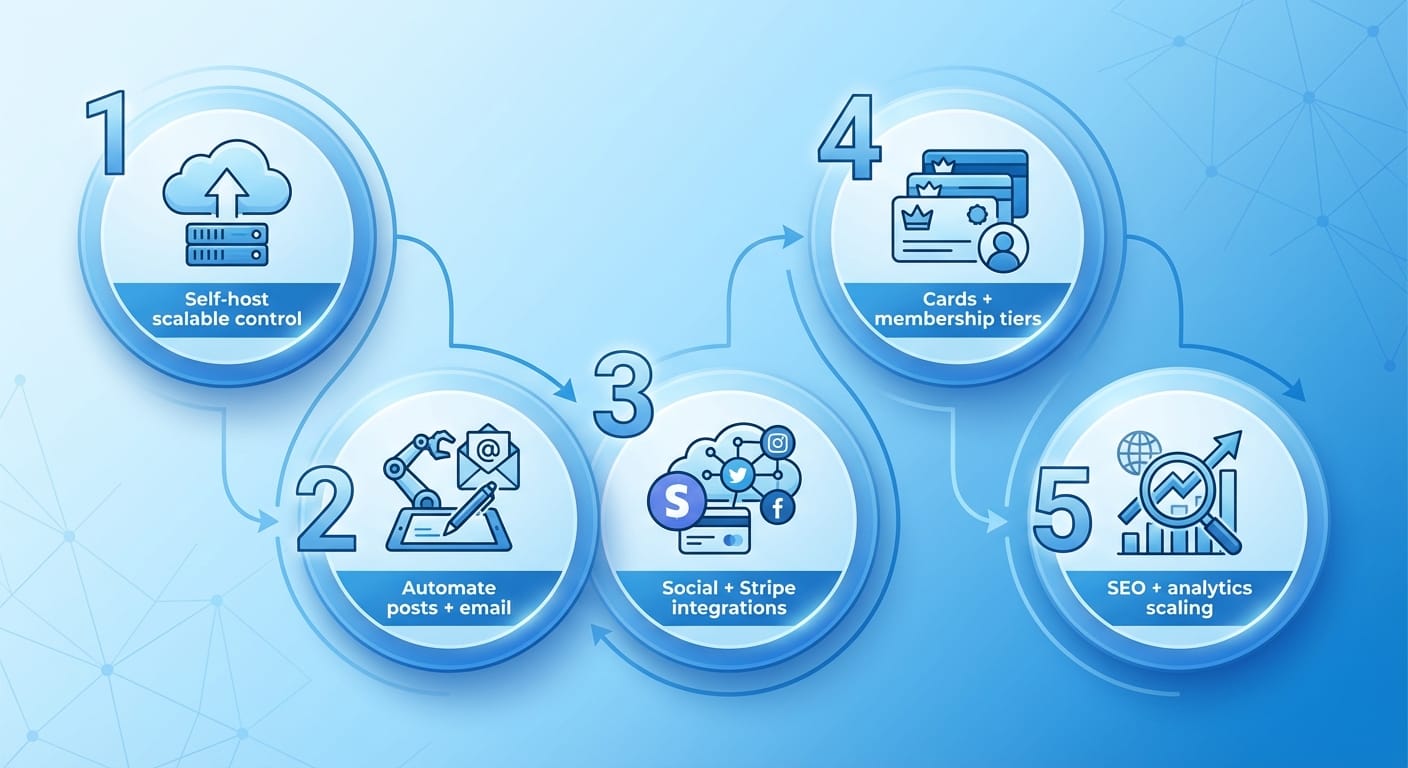
All 5 ways (recap)
- Self-host for scalable control
- Automate publishing + newsletters
- Integrate social + monetization
- Customize with cards + tiers
- Scale SEO + analytics
Action challenge
Pick one of these and do it today:
- Schedule your next two posts in Ghost (even if they’re drafts).
- Create one membership tier and write a single paid-only block.
- Connect Stripe and set a “support this newsletter” donation option.
Because the secret isn’t finding the perfect platform. It’s shipping consistently on a platform that doesn’t fight you.