5 Claude Code Agent Team Use Cases That Actually Save You Time (Not Just Impress Your Friends)
Claude Code Agent Teams are best when you need parallel thinking plus real coordination. Here are 5 practical use cases—research, feature builds, debugging, cross-layer refactors, and multi-specialist code review—where teams beat solo sessions.

Ever wish you could split your brain into five pieces, have them argue it out, and come back with one clean answer?
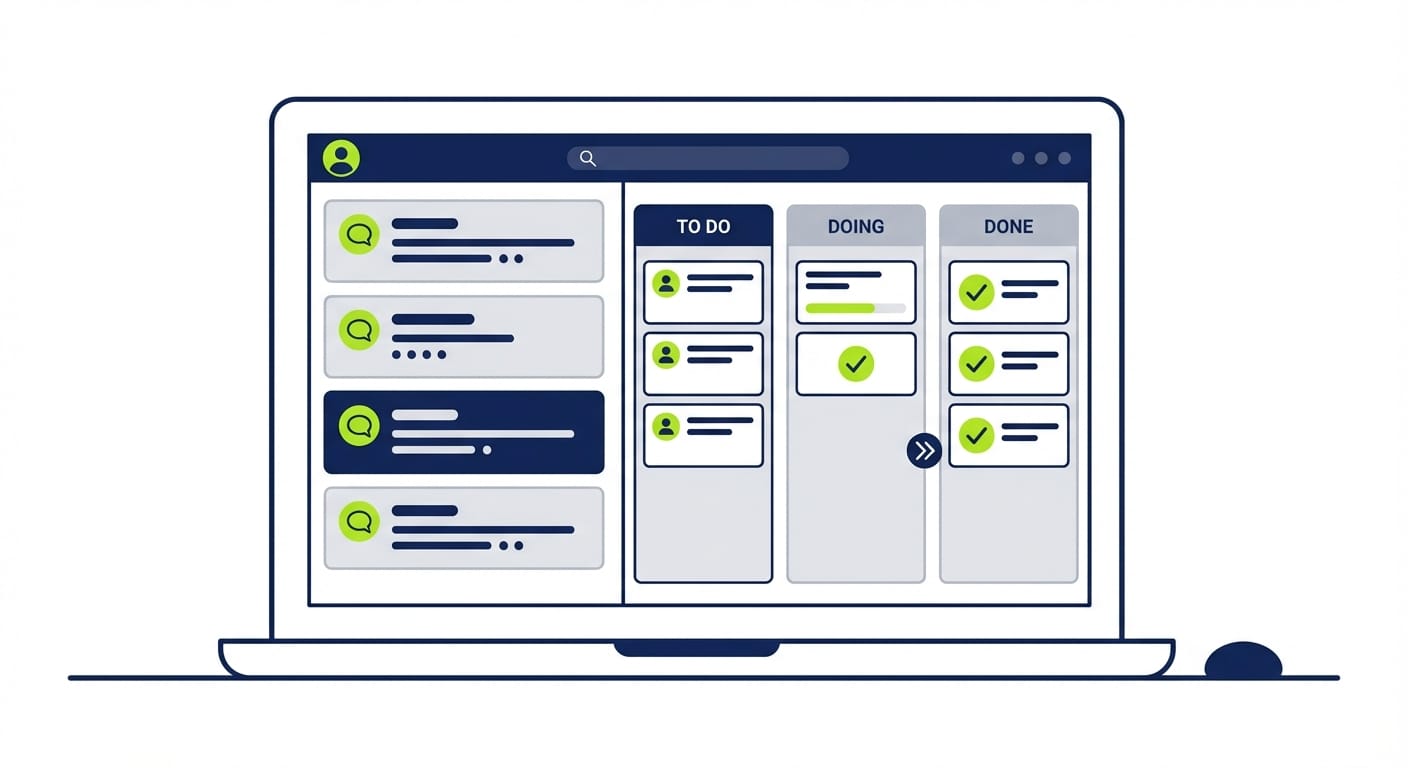
Here’s the thing… that’s basically what Claude Code Agent Teams are for. They’re not “AI that writes code” in the simplistic sense. They’re parallel collaboration: a team lead plus independent teammates, a shared task list, and a mailbox so agents can message each other directly. And that last part—direct teammate-to-teammate communication—is what makes teams different from typical “hub-and-spoke” subagents. [1][3]
Look, I’ll be honest: if your task is small and focused, spinning up a whole team can be like using a leaf blower to clear a single breadcrumb. But for anything that needs discussion, coordination, or competing ideas, Agent Teams tend to outperform a single session (or subagents) because you get real parallelism and real debate. [1][3]
The 5 best use cases for Claude Code Agent Teams
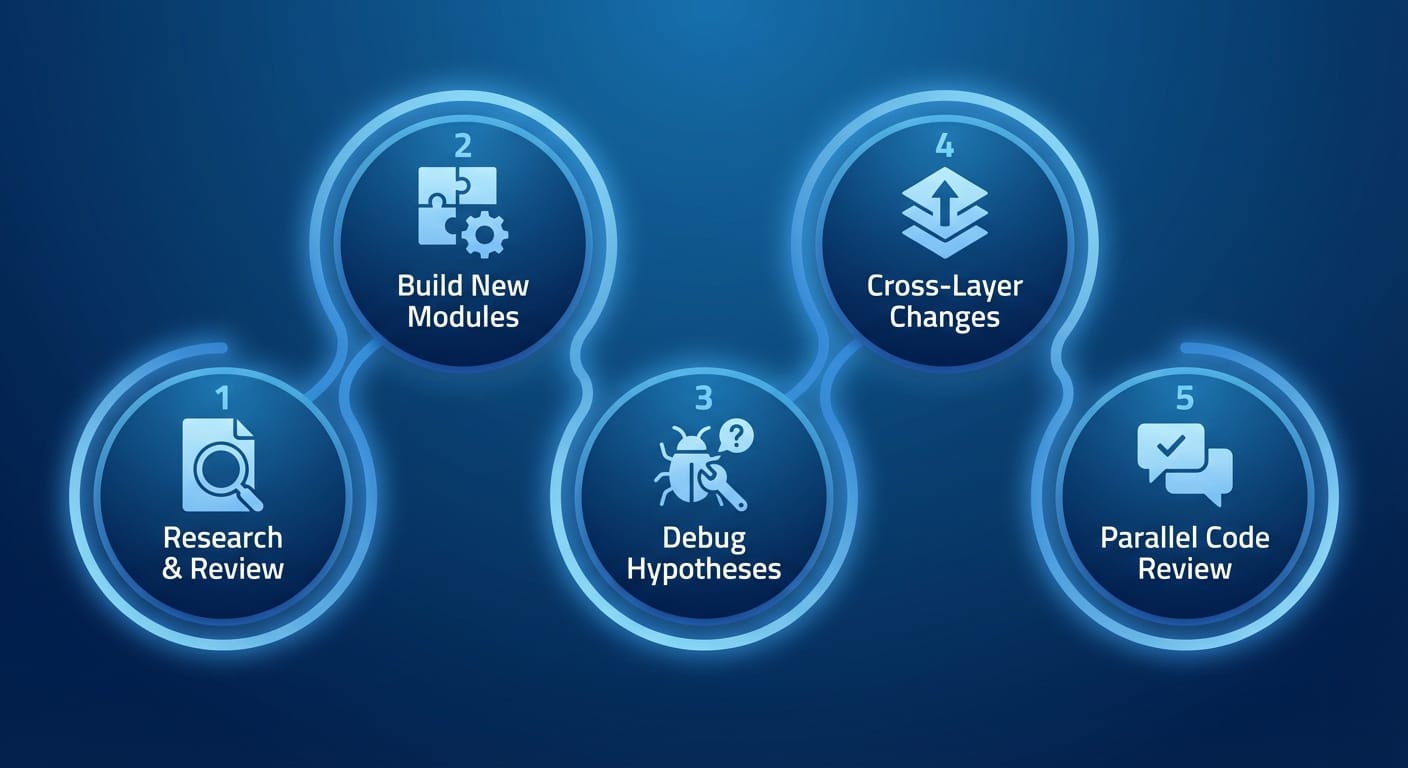
- Research & review (a.k.a. “divide and conquer, then argue productively”) If you’ve ever tried to research a gnarly topic—say a framework migration, a security approach, or an unfamiliar API—you know the pain: you read 14 things, synthesize 2, and forget the rest. With Agent Teams, you can assign teammates to investigate different angles at the same time (docs, examples, risks, alternatives). Then they share findings—and more importantly—challenge each other’s assumptions. That “full mesh” debate is the secret sauce. [1][3] Practical prompt: “Spawn 3 teammates. One reviews official docs, one finds real-world examples, one lists risks and gotchas. Debate conclusions and produce a final recommendation.”
- New module/feature development (parallel builds without stepping on toes) Here’s what most people miss… parallel coding only works if scopes don’t collide. Agent Teams shine when each teammate owns a distinct component: frontend, backend, tests, docs, or a specific service boundary. [1][3] Why it’s better than one long session: you avoid the “serial bottleneck.” While one agent wires the API routes, another can build UI states, and a third can write tests. You still need a lead to coordinate and merge decisions, but you’ll move way faster. Practical prompt: “Lead coordinates. Teammate A builds the backend module, B builds UI, C writes tests. Use shared task list; avoid editing same files.”
- Debugging with competing hypotheses (stop guessing, start disproving) Debugging usually fails for one reason: you get emotionally attached to your first theory. (Don’t deny it—we all do it.) Agent Teams make debugging feel more like a science experiment. You assign each teammate a different hypothesis and have them try to disprove it quickly. One checks logs and traces. One audits recent diffs. One reproduces with minimal test cases. Then the lead consolidates evidence and picks the next experiment. [1][3] Practical prompt: “Spawn 3 teammates: Hypothesis A (DB), B (cache), C (race condition). Each must run 2 tests to disprove their theory. Report evidence and next steps.”
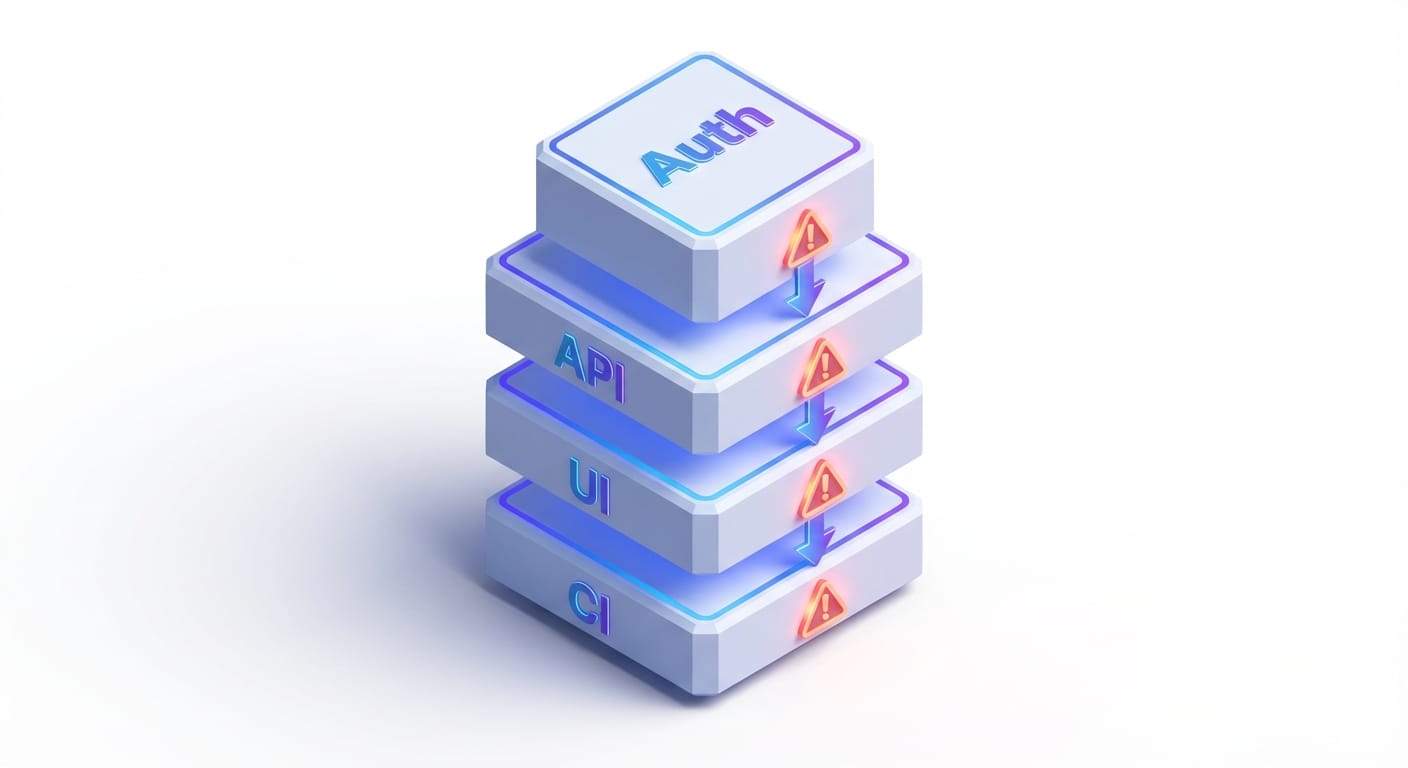
- Cross-layer coordination (when changes span auth, API, UI, and infra) This is where single-agent workflows go to die: you change auth, which breaks middleware, which breaks the UI, which breaks tests, which breaks deployment. Fun. Agent Teams handle cross-layer work by giving each teammate ownership of a layer (auth, backend, frontend, CI/CD). The lead acts like a project manager/architect—making sure the plan is coherent and sequencing risky changes with approvals. This is specifically called out as a strong fit for teams because it’s not just execution—it’s coordination. [3] Practical prompt: “Teammate A: auth refactor plan. Teammate B: API changes. Teammate C: frontend changes. Require plan approval before editing production-critical files.”
- Parallel code review (specialist reviewers, one synthesized verdict) If you’ve ever gotten a PR review that says “LGTM” and nothing else… you know the pain of shallow feedback. With Agent Teams, you can run specialist reviews in parallel: security reviewer, performance reviewer, test coverage reviewer, and “readability/maintainability” reviewer. Then the lead synthesizes into one actionable set of changes. It’s like having a mini review panel, without scheduling a meeting that could’ve been an email. [3] Practical prompt: “Assign 4 reviewers: security, performance, tests, maintainability. Each returns top 5 issues + severity. Lead merges into one prioritized review.”
Pro Tips Box
- Start role-first, not task-first: “security reviewer,” “test author,” “frontend owner” beats “help me with code.”
- Keep scopes non-overlapping: parallel work dies when two agents edit the same files. [1][3]
- Use the lead to force convergence: let agents debate, then have the lead decide and lock a plan.
- Expect higher cost: you’re running multiple Claude instances—worth it when time-to-solution matters. [1]
Common mistakes (don’t do this)
- Using a team for a tiny task: if it’s “rename a function,” a subagent or single session is simpler. [1][3]
- No shared task list: without explicit assignments, “parallel” turns into “duplicated effort.”
- Letting debates run forever: timebox exploration, then force a decision through the lead.
FAQ
Action challenge
The bottom line is… you don’t need Agent Teams for everything. But you probably do have one problem this week that’s messy enough to justify parallel brains.
Try this today: pick one real task (a bug, a PR, a small feature) and run a team with three roles: builder, tester, skeptic. Then compare the outcome to your usual solo workflow. Did you ship faster? Did you catch more issues? Did the “skeptic” save you from a dumb assumption?
Sources
- Anthropic — Claude Code: Agent Teams overview and positioning vs subagents/single sessions (referenced in provided research). [1]
- Anthropic — Examples of non-technical/hybrid Agent Team workflows (content repurposing, pitch decks, proposals, competitive intel). [2]
- Anthropic — Agent Teams use cases: research/review, new modules, debugging hypotheses, cross-layer coordination, parallel code review. [3]
- Industry trend note (2026) — Increased workflow automation across design/legal/development (referenced in provided research). [4]