AI-Generated Content: Useful, Risky, and Way More Manageable Than You Think
AI-generated content isn’t the enemy—unhelpful content is. Here’s a practical, repeatable workflow to use AI for speed without sacrificing quality, voice, or trust.

Ever read something online and think, “Wait… did a robot write this?” Here’s the thing: that question used to be an insult. Now it’s basically a new category of content. And whether you love it, hate it, or you’re just tired of hearing about it, AI-generated content is already sitting inside your marketing, docs, emails, support chats, and search results.
What most people miss is that the real skill isn’t “using AI.” It’s directing AI—like you’re a film director and the model is your camera crew. If you don’t give it a plan, you’ll get a lot of footage… and not much of a movie.
The actual problem: speed without a steering wheel

AI-generated content is a cheat code for speed. But speed alone doesn’t equal results. In real life, teams run into the same set of issues:
- Generic output (it reads like a brochure had a baby with a toaster)
- Factual mistakes (a.k.a. hallucinations)
- Brand voice drift (today you’re witty; tomorrow you’re a tax form)
- Search risk if you publish a bunch of low-value fluff
- Legal/copyright uncertainty depending on how content is sourced and reused
And yes, Google has opinions here. They’ve said it plainly: it’s not “AI content” they’re against—it’s unhelpful content, regardless of how it’s produced. (More on that in a second.)
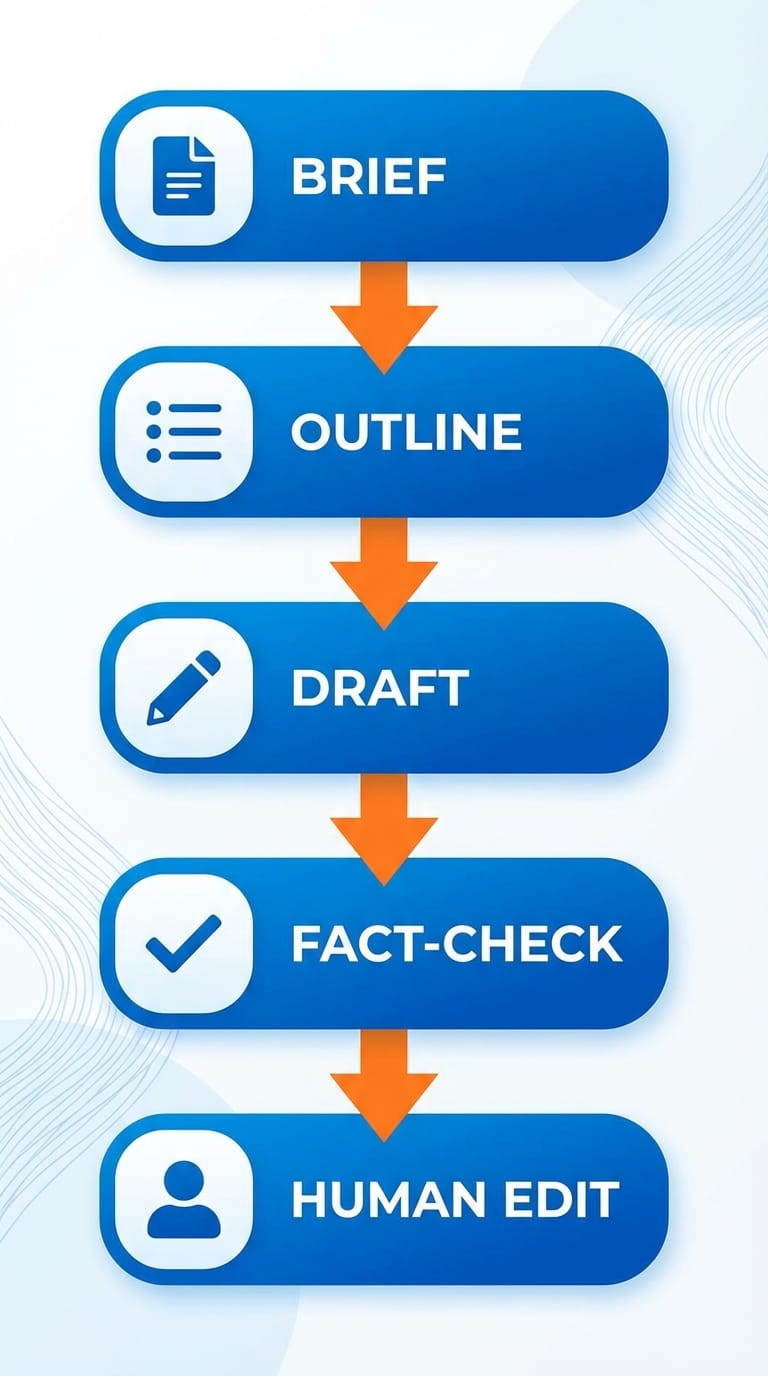
So what’s the solution? A simple workflow that keeps humans in charge
Look, I’ll be honest: most “AI content strategies” are just prompt screenshots with a motivational caption. What you want is a workflow your team can repeat without lowering quality.
Step 1: Start with a brief (not a prompt)
If you give AI a vague prompt, it’ll give you a vague draft. Instead, write a mini-brief:
- Who’s the audience?
- What’s the goal (rank, convert, educate, reduce support tickets)?
- What’s the point of view (your opinion, your angle)?
- What sources should it rely on?
Step 2: Make AI outline first
Outlines are where you win. If the outline is strong, the draft is easy. If the outline is weak, you’ll be rewriting forever. Have AI propose 2–3 outlines, then you pick and tweak.
Step 3: Draft fast, but force specificity
Here’s my rule: if the draft doesn’t include examples, numbers, or named tools, it’s probably too generic. Ask for concrete elements: “Include 2 examples,” “add a simple analogy,” “explain tradeoffs.”
Step 4: Fact-check like you mean it
AI will confidently state things that are almost true. That’s the danger—it sounds right. For anything that matters (stats, legal claims, product details), verify with primary sources or reputable references.
Step 5: Human edit for voice + usefulness
This is where you earn it. Add your real-world take, cut filler, tighten the structure, and make sure the reader walks away with something actionable.
Pro Tips Box: stuff that makes AI content feel human (and perform)
Pro tips I’d actually use:
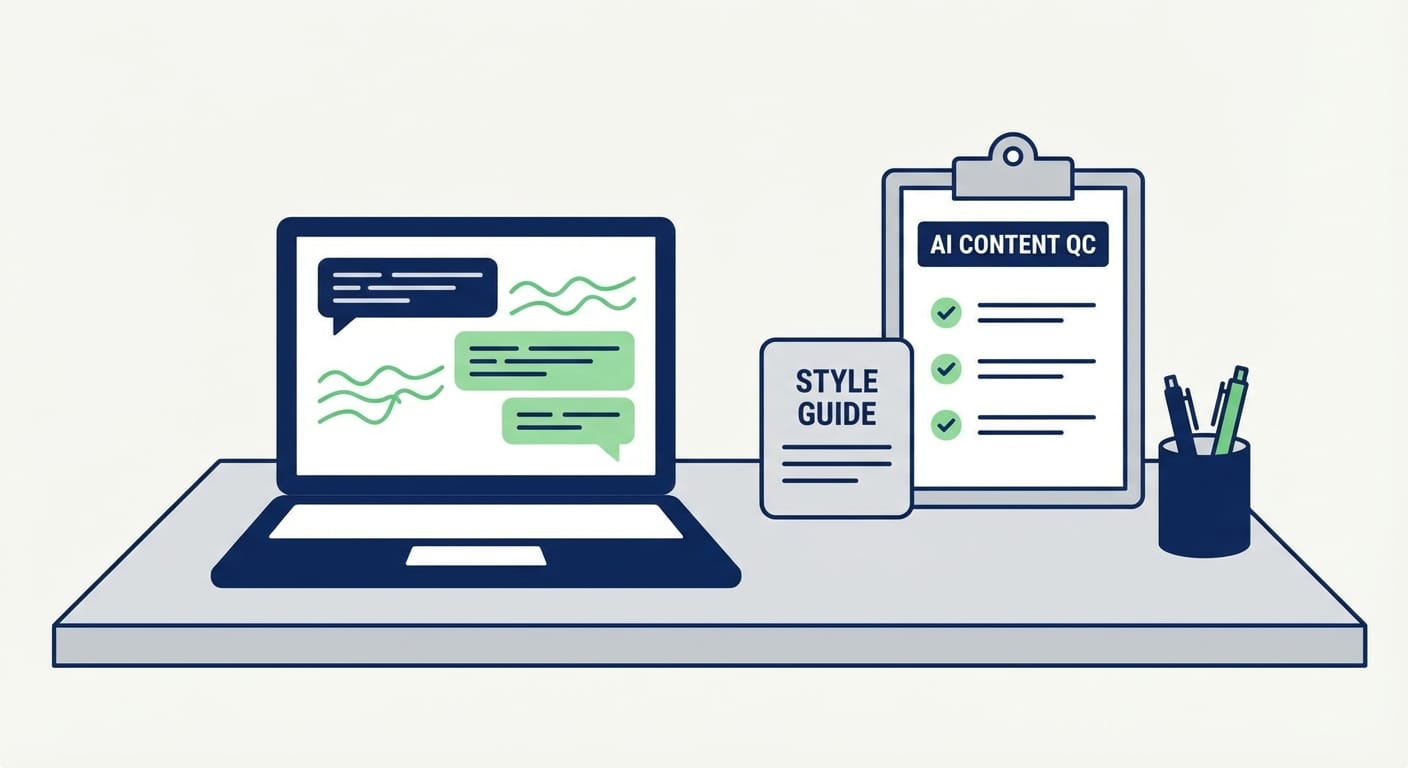
- Build a tiny voice guide: 5–10 bullets (“short sentences,” “no corporate fluff,” “use contractions,” “one opinion per section”). Then paste it into prompts.
- Use “reference-first” prompts: feed AI your notes, transcripts, or internal docs first; then tell it to write only from those.
- Ask for counterarguments: it forces nuance and reduces the “AI cheerleader” vibe.
- Create reusable templates: intro patterns, CTA patterns, FAQ patterns. Consistency beats genius.
Common mistakes (a.k.a. how people accidentally publish junk)
- Publishing first drafts: AI drafts are like grocery store sushi. Technically food, but… you sure?
- Keyword-stuffing prompts: modern search systems punish content that’s clearly written for bots instead of humans.
- No original insight: if your post could be written by anyone with an internet connection, it won’t stand out.
- Letting AI invent citations: models may generate plausible-looking sources. Always verify.
Stats spotlight: what the big players are actually saying
- Google: focuses on content quality and “helpful content,” not the method of creation. Source: Google Search Central. Google Search and AI-generated content
- OpenAI: notes that ChatGPT can produce incorrect information and should be used with caution for factual accuracy. Source: OpenAI. ChatGPT product page (limitations)
- U.S. Copyright Office: states copyright protects human authorship; purely AI-generated material generally isn’t protected. Source: U.S. Copyright Office. Copyright and Artificial Intelligence
FAQ: quick answers people keep dancing around
Will Google penalize AI-generated content?
Not automatically. Google’s stance is that unhelpful content is the problem, regardless of whether a human or AI wrote it. Source: Google Search Central.
Should I disclose that content was AI-generated?
Depends on context. If AI materially affects trust (medical, financial, reviews, journalism), transparency is usually smart. Also check your industry standards and internal policy.
Can AI content be copyrighted?
In the U.S., copyright requires human authorship. If a human meaningfully contributes (selection, arrangement, edits), those human contributions may be protectable. Source: U.S. Copyright Office.
How do I keep AI from making stuff up?
You can’t guarantee it, but you can reduce it: use reference-first prompts, constrain the model to your provided sources, and verify anything that matters.
Personal sign-off
The bottom line is: AI-generated content isn’t a magic wand, and it’s not the apocalypse. It’s a power tool. If you hand it to someone without training, you’ll get a mess. If you build a simple workflow—brief → outline → draft → fact-check → human edit—you’ll ship faster and keep your credibility intact.
If you’re using AI for content today, ask yourself one question: are you publishing words… or are you publishing value?