AI Automation’s Having a Wild 24 Hours: Robots, Document “Mind-Reading,” and… Ads in ChatGPT
If you blinked, you probably missed three of the most viral AI automation stories to drop in the last 24 hours. And yeah, they’re the kind of headlines that make you go, “Wait… are we actually doing this now?”
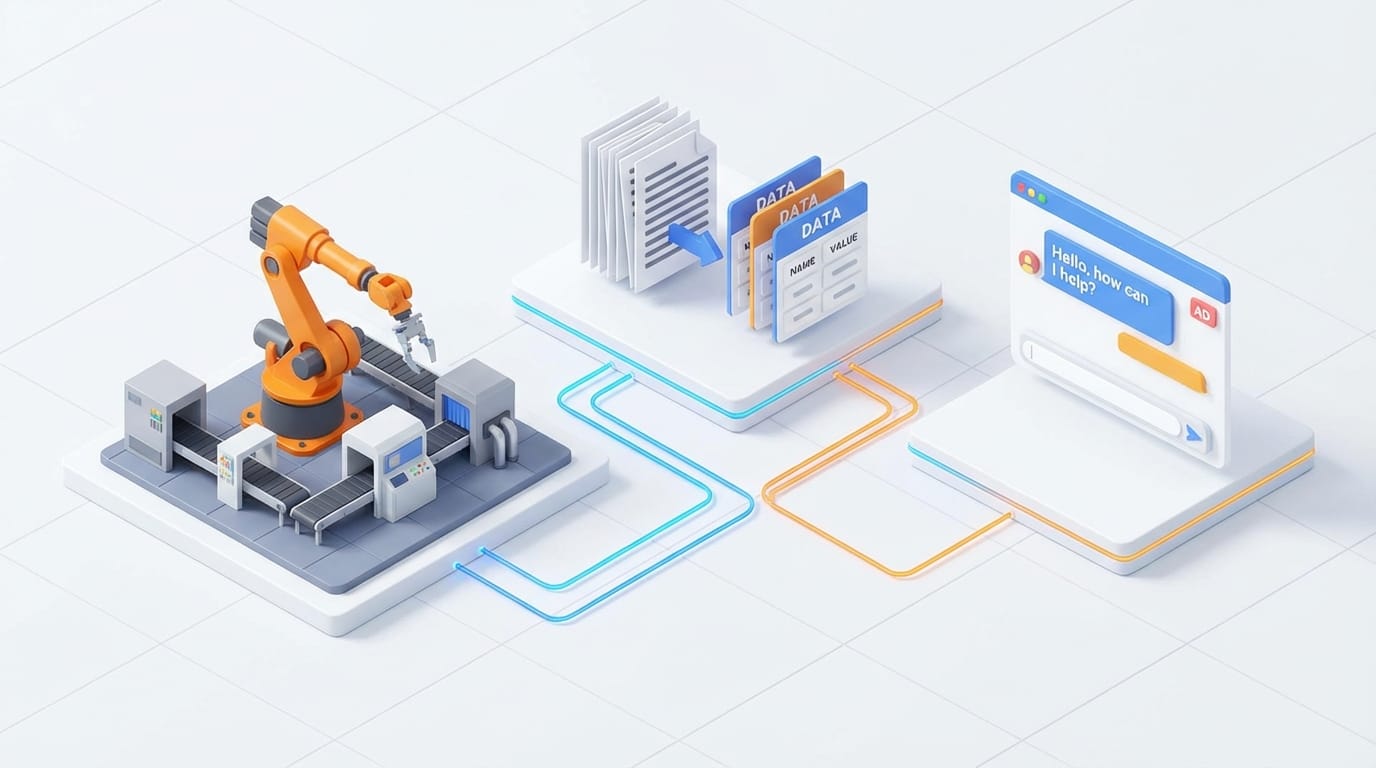
Here’s my take: AI automation isn’t just about chatbots answering support tickets anymore. It’s turning into a three-headed beast—physical robots doing real work, software automating the messy document world, and AI platforms figuring out how to pay the bills. Let’s break down the top three headlines and what they actually mean for you (not just for people who wear lanyards at CES).
1) NVIDIA Says We’ve Hit the “ChatGPT Moment” for Robotics
What happened
At CES 2026, NVIDIA CEO Jensen Huang basically lit the signal flare for “physical AI.” He called it the “ChatGPT moment in robotics” and unveiled the Jetson T4000 module—positioned as energy-efficient compute for robots—plus partnerships with heavy hitters like Boston Dynamics and Caterpillar to deploy AI-driven robots in manufacturing and heavy industry. That’s not sci-fi. That’s forklifts, factories, and job sites. [3]
Why it matters (in plain English)
Think about what happened when cloud computing got cheap and easy: suddenly every business could spin up infrastructure without owning a server closet. This is that… but for robots. If NVIDIA (and friends) make the “robot brain” cheaper, smaller, and easier to integrate, you get more robots in more places doing more tasks.
And let’s be honest: robots aren’t coming for your job because they’re evil. They’re coming because labor is expensive, shortages are real, and downtime costs a fortune. If a robot can work a night shift without complaining about the coffee, businesses are going to do the math.
My stance
I’m bullish on this, with one big caveat: the winners won’t be the companies that buy the flashiest robots. The winners will be the ones that redesign workflows around what robots are good at—repeatable, measurable, structured tasks—and keep humans doing the messy judgment calls.
Practical advice: what to do this week
- If you’re in ops/manufacturing: list your top 5 repetitive tasks where errors are costly (inspection, picking, palletizing, inventory counts). That’s your robotics shortlist.
- If you’re a founder: don’t build “a robot.” Build a robot-enabled workflow with clear ROI (time saved, defects reduced, safety incidents avoided).
- If you’re an employee: learn to work with automation: basic robotics concepts, safety, and process mapping will age way better than “I do the same thing manually.”
Relevant hashtags: #PhysicalAI #NVIDIARobotics #CES2026 #AIAutomation
2) Box Launches “Box Extract” to Automate Unstructured Data Extraction
What happened
Box announced Box Extract (Jan 17), a tool that uses AI to pull metadata and structured info out of unstructured documents—think contracts, PDFs, and the kind of file that always shows up five minutes before a deadline. The pitch: streamline workflows and speed up decision-making across content-heavy business processes. [4]
Why it matters (in plain English)
Most business automation dies in the swamp of unstructured data. Everyone wants “automated workflows,” but the data is trapped in documents that were basically designed for humans to read, not machines to process.
Here’s the analogy: unstructured docs are like a junk drawer. You know the scissors are in there somewhere, but good luck finding them fast. Box Extract is basically saying, “Let’s label everything in the drawer automatically.”
My stance
This is the least flashy headline of the three, and it might be the most immediately useful. Why? Because document chaos is everywhere: procurement, HR, legal, sales, compliance, finance. If you can reliably extract key fields, you can automate approvals, alerts, renewals, audits—the boring stuff that quietly eats your week.
Practical advice: how to use this idea even if you don’t use Box
- Start with one document type: contracts, invoices, SOWs, onboarding forms—pick a single “high pain” category.
- Define 5–10 must-have fields: renewal date, payment terms, vendor name, SLA, total value, termination clause. If you can’t name the fields, you can’t automate anything.
- Build a human-in-the-loop review: AI extraction is great, but don’t pretend it’s perfect. Route low-confidence fields to a reviewer. That’s how you get speed and accuracy.
Relevant hashtags: #AIAutomation #BoxExtract #WorkflowAI #EnterpriseAI
3) ChatGPT Starts Testing Ads in the U.S. (Yep, Ads)
What happened
OpenAI began testing ads in ChatGPT in the U.S. on Jan 17—signaling a shift in monetization strategy as AI tools (agents, automation products, and infrastructure plays) get more expensive to run and more competitive. [8]
Why it matters (in plain English)
Here’s the uncomfortable truth: AI is not cheap. Models cost real money to train, deploy, and serve. Ads are the oldest internet business model in the book—because they work.
But ads inside an AI assistant aren’t like banner ads on a blog. A chatbot is a decision-influencing machine. If you ask, “What’s the best tool for X?” and the assistant is ad-incentivized… you’re going to wonder who’s actually talking: the helpful assistant, or the highest bidder.
My stance
I don’t love it, but I’m not shocked. If you want free (or cheap) AI at massive scale, somebody’s paying. The danger isn’t “ads exist.” The danger is trust erosion. Once users suspect recommendations are pay-to-play, the product gets less useful—even if the model is brilliant.
Practical advice: protect yourself and your team
- For individuals: treat AI recommendations like you treat Google results: useful, but not gospel. Cross-check anything that impacts money, health, or legal risk.
- For companies: if you’re building workflows on top of ChatGPT, create an internal rule: automation can suggest, but humans approve for vendor selection, purchases, and policy decisions.
- For product teams: log prompts and outputs for auditing. If ads influence responses, you’ll want evidence and guardrails.
Relevant hashtags: #ChatGPTAds #OpenAI #AIMonetization #AIAutomation
Zooming Out: The Pattern Behind These Headlines
If you connect the dots, you get a pretty clear picture of where AI automation is heading:
- Robotics is getting its “platform moment” (standardized compute + partnerships + real deployments). [3]
- Enterprise automation is moving upstream into the messy world of documents and content. [4]
- AI monetization is maturing (and yes, that may mean ads, tiers, and new tradeoffs). [8]
So what should you do with all this? Don’t just watch the headlines like it’s a sport. Use them as a checklist for where to place your bets—skills, products, and processes.
Actionable Takeaways (Do These, Not That)
- Pick one automation wedge: physical (robots), document/workflow (extraction), or platform (AI distribution/monetization). Trying to do all three is how you end up doing none.
- Measure ROI in adult numbers: hours saved, defects reduced, cycle time cut, compliance risk lowered. “It’s cool” is not a KPI.
- Keep humans in the loop where it counts: safety, money, legal, and brand trust. Automate the grunt work; supervise the consequences.
Sources
- [3] NVIDIA CES 2026 robotics announcement and “ChatGPT moment in robotics” framing; Jetson T4000 and industry partnerships (Boston Dynamics, Caterpillar).
- [4] Box announcement of Box Extract for AI-driven unstructured data extraction and workflow automation (Jan 17, 2026).
- [8] OpenAI testing ads in ChatGPT in the U.S., signaling monetization shifts (Jan 17, 2026).