AI Agents vs. Marketing Automation: The Quiet Takeover Happening Right Now
AI agents aren’t just better workflows—they’re autonomous operators that keep your CRM, campaigns, and analytics constantly optimized. Here’s where they’re replacing traditional marketing automation first, and how to adapt without losing control.

38% of CMOs think 16–50% of marketing functions will be replaced or restructured by AI agents in the next 24 months. Not “maybe someday.” Basically… now. And if you’re still thinking in terms of “we built some Zapier zaps and HubSpot workflows,” you’re about to feel like you brought a bicycle to a Formula 1 race.
Here’s the thing… traditional marketing automation was built for a world where humans babysit rules. AI agents are being built for a world where software babysits outcomes.
Traditional automation has a ceiling (and you’ve probably hit it)
Let me describe the “classic” marketing automation setup most teams are running:
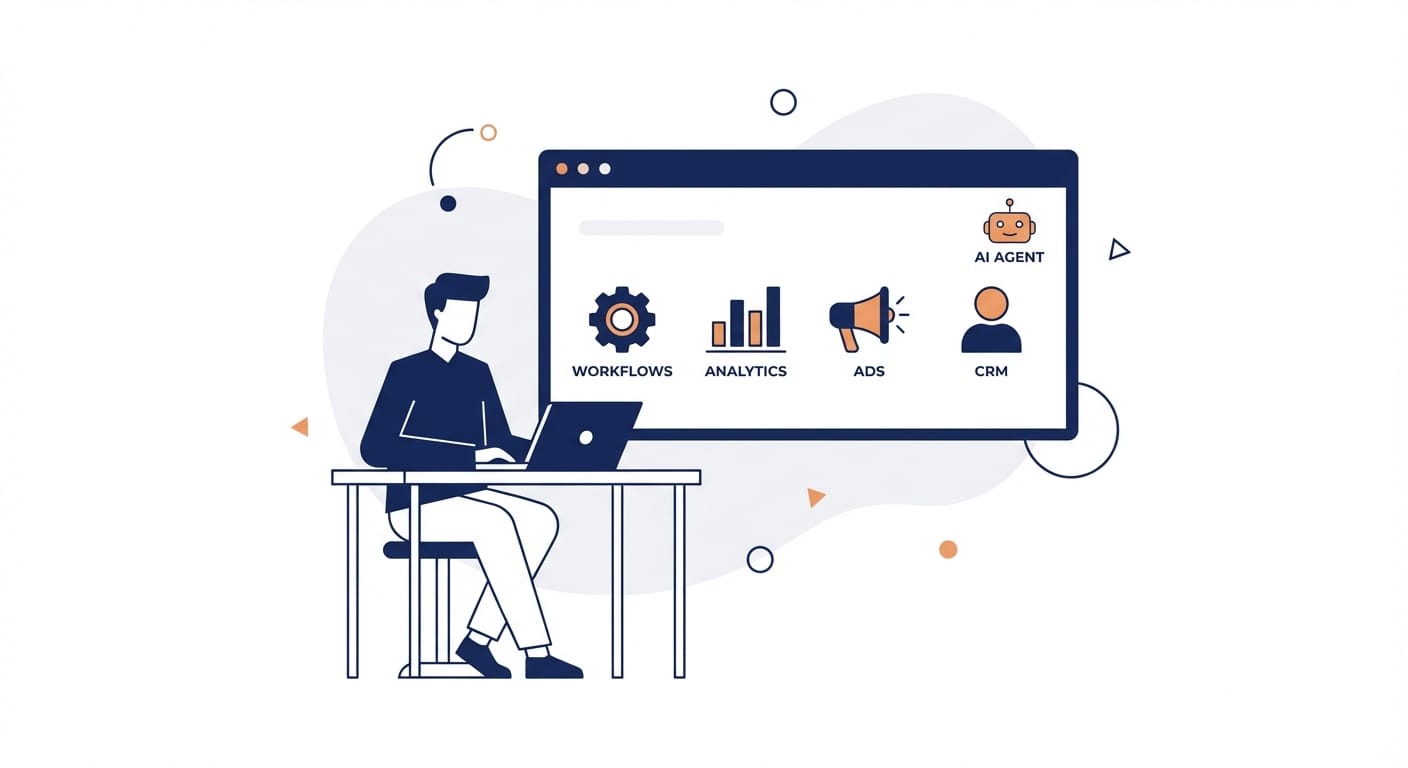
- Someone set up lifecycle stages two years ago.
- Lead routing is a maze of if/then rules nobody wants to touch.
- Reporting is 70% data prep and 30% “so what?”
- Workflows break when APIs change, and the fix lives in a Slack thread from 2023.
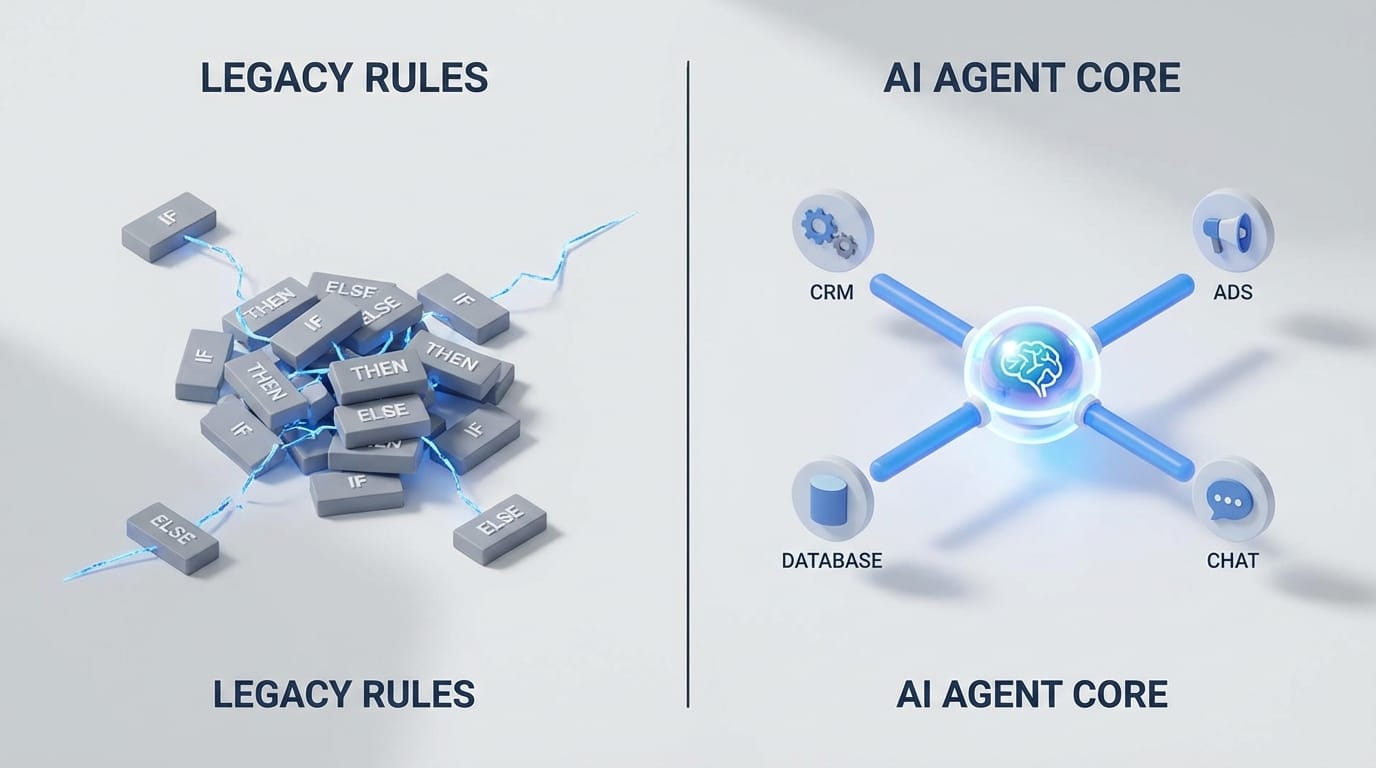
That’s not because your team is bad. It’s because traditional automation is static. It’s rule-based, brittle, and it assumes the world won’t change. And marketing changes every Tuesday.
AI agents flip that model. Instead of “run this workflow,” it’s “hit this goal”—and the agent keeps adjusting until it gets there.
So what’s an AI agent, in marketing terms?
Think of an AI agent like a junior ops person who:
- Never sleeps
- Can use tools (CRM, ads platforms, spreadsheets, BI, ticketing)
- Remembers context (what worked last month, what broke yesterday)
- Optimizes toward goals (ROAS, pipeline, conversion rate)
- Runs feedback loops (tries, measures, adjusts)
Here’s what most people miss: agents aren’t “better automations.” They’re closer to autonomous operators. They don’t just follow instructions—they manage a system.
That autonomy is why they’re replacing traditional marketing automation (or at least swallowing most of it).
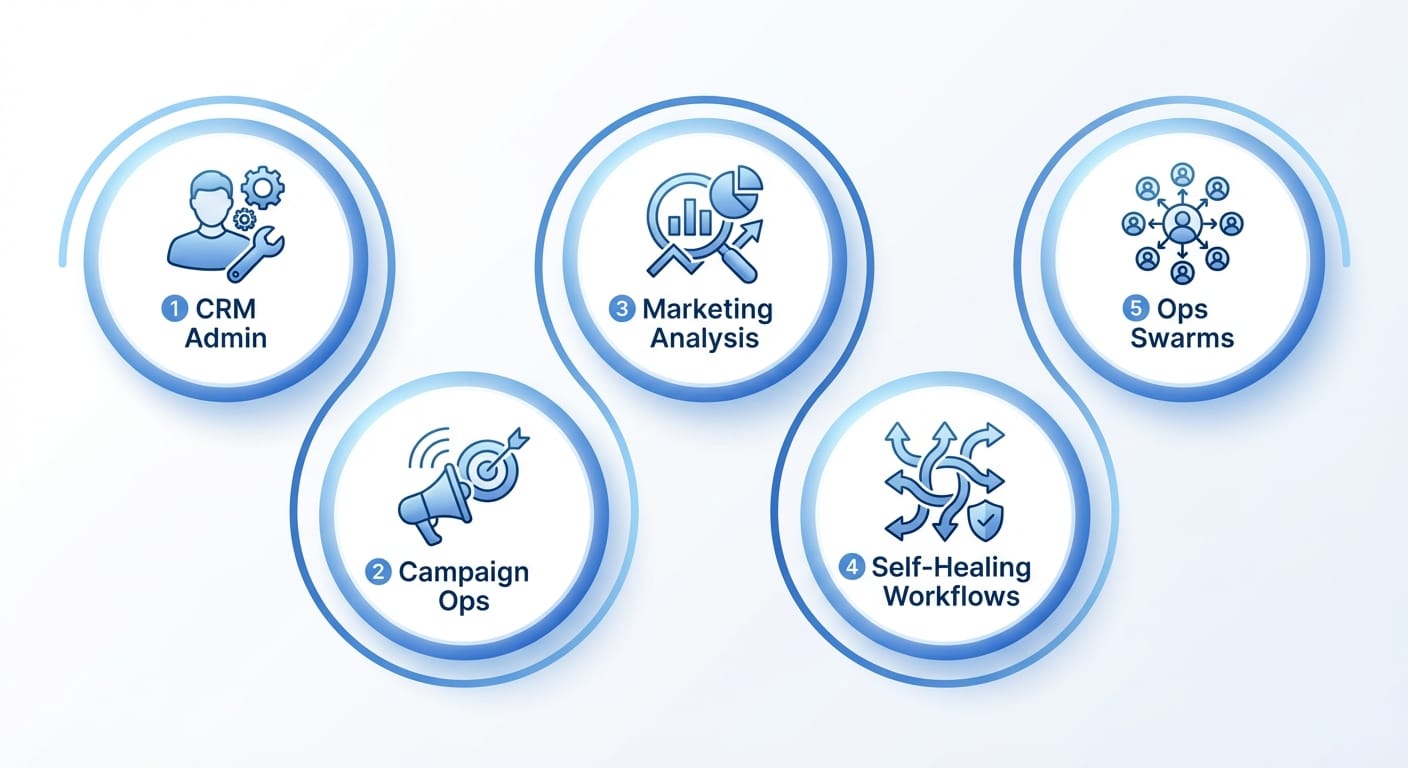
Where AI agents are replacing marketing automation first (5 big shifts)
I’m going to keep this practical. These are the places agents are already taking over day-to-day ops work in 2026-style teams.
- CRM administration becomes continuous.Instead of quarterly “CRM cleanup days,” agents continuously dedupe contacts, normalize fields, fix lifecycle stages, and route leads using predictive scoring. Some will even rewrite automation logic when conversions dip.This is already showing up in ecosystems around Salesforce and HubSpot integrations. [1]
- Campaign ops goes from scheduled to “always-on.”Old world: you launch a campaign, wait, pull a report, tweak next week.Agent world: the campaign is “continuously alive.” Agents generate creative variants, pause losers, shift budget based on real-time ROAS, and keep testing without someone manually steering every lever. [1]
- Analysis stops being a spreadsheet job.Agents pull and normalize cross-platform data, detect patterns, generate insights, and forecast scenarios. Humans don’t disappear here—they move into insight curation: deciding what matters, translating it into strategy, and making sure the agent isn’t optimizing toward something dumb (like short-term clicks that poison long-term retention). [1]
- Workflows become self-healing.Zapier-style workflows are fine… until a field name changes or an API version deprecates and your whole funnel silently breaks.Agent systems monitor failures, adapt to tool changes, and reroute logic. Less “why did this stop working?” and more “it handled it.” [1]
- Ops coordination becomes swarm work.Instead of humans chasing tickets and dependencies, agent “swarms” can handle triage, routing, SLAs, and cross-team coordination. The human role shifts toward being an agent product manager—setting constraints, roadmapping improvements, and auditing outcomes. [1]
Pro Tips Box: If you want agents to work, give them “guardrails,” not vibes
My opinion: most agent projects fail because teams ask for magic and provide zero constraints.
Try this instead:
- Define success metrics (ROAS, CAC, pipeline velocity, MQL→SQL rate)
- Set hard limits (max daily spend changes, brand voice rules, compliance checks)
- Require logging (every action + why it did it)
- Start with a sandbox before touching production campaigns
Agentic commerce: the bigger shift most marketers aren’t ready for
Operations is the first domino. But the bigger quake is consumer-side agents.
Agentic commerce is when the buyer’s AI agent does the browsing, comparing, and purchasing through APIs. That pushes marketing from “omnichannel persuasion” toward “agent-friendly discoverability.” In other words: your brand needs to be legible to models, not just humans.
Brands are starting to optimize for what some folks call “Share of Model”—how often an AI assistant recommends you in the top set. That means structured product data, real-time inventory/pricing APIs, clear policies, and fast fulfillment signals. [2]
Also, agent-to-agent interactions collapse timelines. A customer agent asks “is it in stock?” and your brand agent answers instantly. Minutes become seconds—unless your org is still stuck in siloed systems. [2]
Common mistakes I’m seeing (don’t do these)
- Replacing humans before replacing process.If your data is a mess, agents will just fail faster. Clean the inputs first.
- No audit trail.If you can’t answer “why did it change the budget?” you’re not ready for autonomy.
- Letting agents optimize the wrong goal.They’ll happily win on CTR while nuking your brand. Goals need balance.
- Starting with the hardest workflow.Begin with one loop (like lead routing or budget pacing), prove it, expand.
Comparison table: Traditional automation vs AI agents
FAQ: The real questions people ask me
Are agents replacing marketing ops jobs?
Some low-level repetitive roles shrink, yes. But what’s more common is re-architecture: humans move up into strategy, oversight, and agent management. Fewer “button pushers,” more “systems owners.” [1]
Do agents replace SaaS tools like HubSpot or Salesforce?
No—agents mostly ride on top of SaaS. They use your existing tools through APIs, but add autonomy and cross-tool coordination. Think “DevOps layer,” but for agents—often called AgentOps. [2]
What’s the first workflow to agent-ify?
Pick the loop with the highest repetition and clear metrics: lead routing, CRM hygiene, budget pacing, or weekly reporting. If you can’t measure it, an agent can’t optimize it.
What’s the biggest risk?
Silent failure and misaligned optimization. That’s why logging, constraints, and periodic audits matter. Treat agents like production systems, not clever toys.
What’s Next: Your team’s new job is “agent management”
The bottom line is… marketing automation isn’t disappearing. It’s getting absorbed into agent-driven systems where workflows aren’t “set and forget,” they’re “set, observe, improve.”
If you’re leading marketing ops, your next promotion is basically: operator of autonomous systems. You’ll define goals, set guardrails, monitor performance, and manage a fleet of agents like they’re junior teammates.
And honestly? That sounds way more fun than debugging a broken webhook at 11:47 PM.
Sources
- [1] Provided research summary: AI agents replacing marketing automation (CRM, campaigns, analysis, self-healing workflows, ops coordination), 2026 examples (Salesforce/HubSpot ecosystems).
- [2] Provided research summary: Agentic commerce, agent-to-agent interactions, AgentOps layer, SaaS evolution.
- [3] Provided research summary: CMO expectation stats—38% predict 16–50% replaced/restructured within 24 months; 70% transformative.
- [4] Provided research summary: 2026 drivers—LLM reliability, API maturity, ROI pressure.
- [5] Provided research summary: agent capabilities—autonomy, tool integration, memory, goal optimization, feedback loops enabling speed/accuracy gains.